Lamborghini Miura P400 S: Taming the World's First Supercar
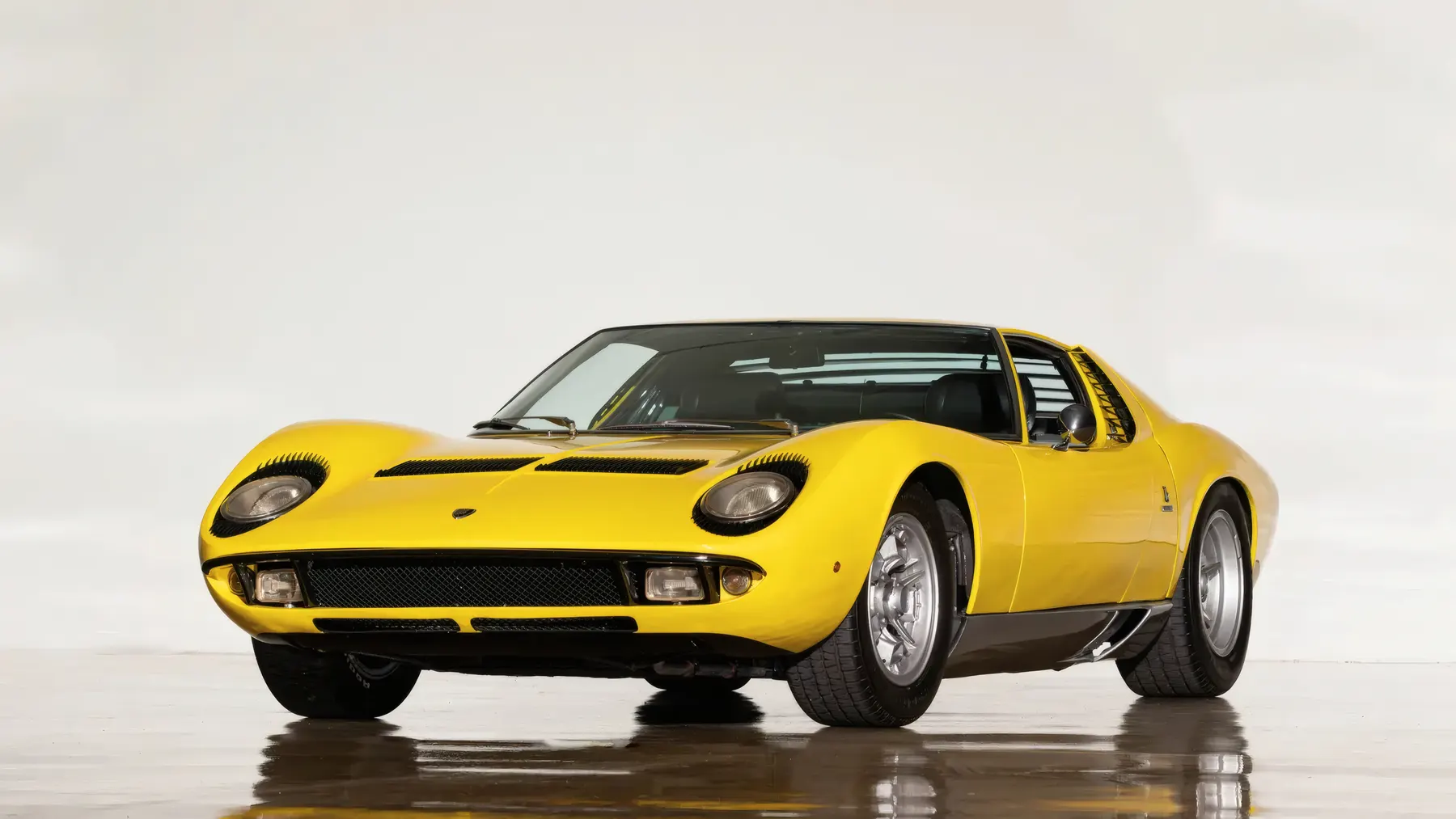
1969 Lamborghini Miura P400 S by Bertone

Images: Robin Adams / RM Sotheby's
When Lamborghini wheeled a revised Miura onto its stand at the Turin Motor Show in the autumn of 1968, there was no repeat of the sensation the original had caused two and a half years earlier in Geneva. That was rather the point. The P400 S wasn’t built to shock a crowd; it existed because Lamborghini’s engineers had spent two years learning, largely from customers driving the car hard, exactly where the first Miura fell short. The result is a car that rarely gets the attention lavished on the razor-edged original or the wide-hipped SV that followed it, yet the S is arguably the version where Lamborghini worked out how to turn a beautiful, occasionally alarming showpiece into something closer to what a supercar ought to be.
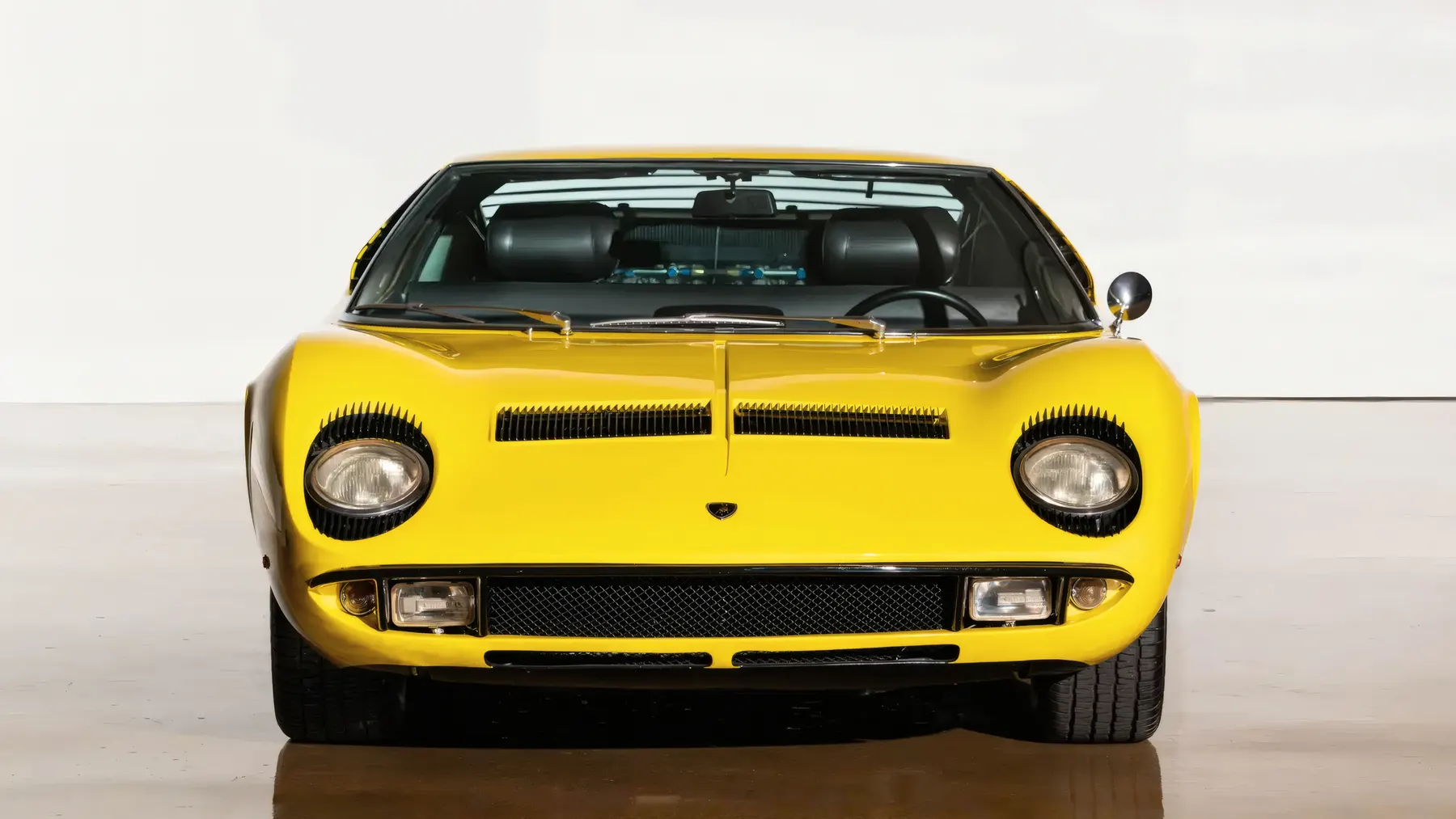
The Miura itself needs little introduction. Conceived after hours by Lamborghini engineers Giampaolo Dallara and Paolo Stanzani, with development driving handled by New Zealander Bob Wallace, then clothed by a 22-year-old Marcello Gandini at Bertone, it took the previously unthinkable step for a series-production road car of mounting its V12 transversely amidships, a packaging trick Dallara borrowed conceptually from the Morris Mini to keep the wheelbase short. Shown as a bare chassis at Turin in 1965 and as a complete car at Geneva the following March, the P400 immediately vaulted Lamborghini past Ferrari and Maserati in the public imagination, and it’s still widely described as the car that invented the supercar template still followed today. Even one of the Miura’s most celebrated design flourishes had a resourceful, unglamorous origin: the metal “eyelashes” ringing the headlamps were there partly to disguise the fact that the light units themselves were borrowed from the Fiat 850 Spider, then also in production at Bertone’s Grugliasco works. Lamborghini’s own histories put P400 production at around 265 cars between 1966 and 1968, though several specialist sources cite a slightly higher figure closer to 275; either way, it was this gorgeous but rough-edged machine that the S set out to fix.
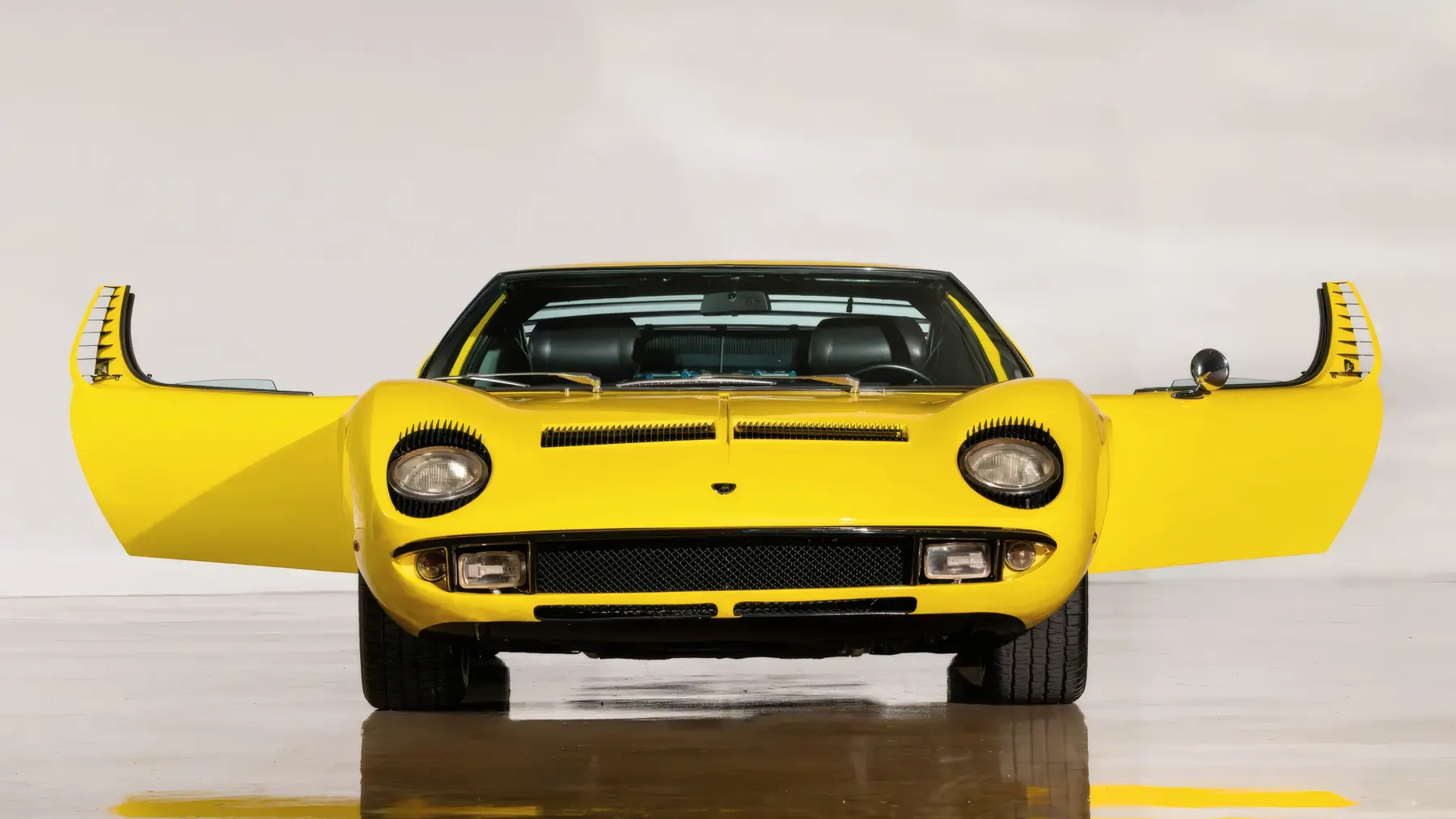
Lamborghini unveiled the update at Turin in the autumn of 1968, with production getting under way that December and continuing into 1971. Total P400 S output is consistently put at 338 cars, comfortably the most numerous of the three production Miura variants and a healthy step up from the P400 it replaced. Most of what changed lived beneath the skin. From roughly chassis number 125 onward, Lamborghini specified thicker chassis steel, up from 0.9 mm to 1 mm, addressing a genuine flex problem that had blunted the original’s cornering precision at speed. The rear suspension’s lower wishbone mounting points were relocated to cut down on squat under hard acceleration, the old Armstrong dampers gave way to Koni units, the splined driveshafts were swapped for constant-velocity joints, and the car rode on Pirelli’s newly developed Cinturato radials in place of the P400’s older rubber. Ventilated disc brakes, still with Girling calipers, arrived partway through the S’s production run, replacing the solid discs fitted to the earliest cars.
Under the rear deck, the familiar 3.9-litre, four-cam V12 gained reshaped combustion chambers, higher-lift camshafts with revised timing and four Weber 40IDL-3L carburettors on fatter manifolds, lifting peak output from the P400’s 350 bhp at 7,000 rpm to 370 bhp at 7,700 rpm, with torque rising from 271 lb-ft to 287 lb-ft at 5,500 rpm (a handful of period-adjacent sources quote a slightly lower 365 bhp, likely reflecting a different measurement basis rather than a genuinely different tune). It was a meaningful jump on paper, though period testers noted that the extra grip from the new tyres soaked up much of the additional power rather than translating it directly into a quicker car. One weakness carried straight through from the P400, however: the Miura shared a single oil supply between engine and gearbox, and sustained hard cornering could starve the V12 of lubrication on one side of the sump, with potentially engine-destroying results. Lamborghini wouldn’t properly address this until the SV, and even then only as an option fitted to a portion of that car’s run.
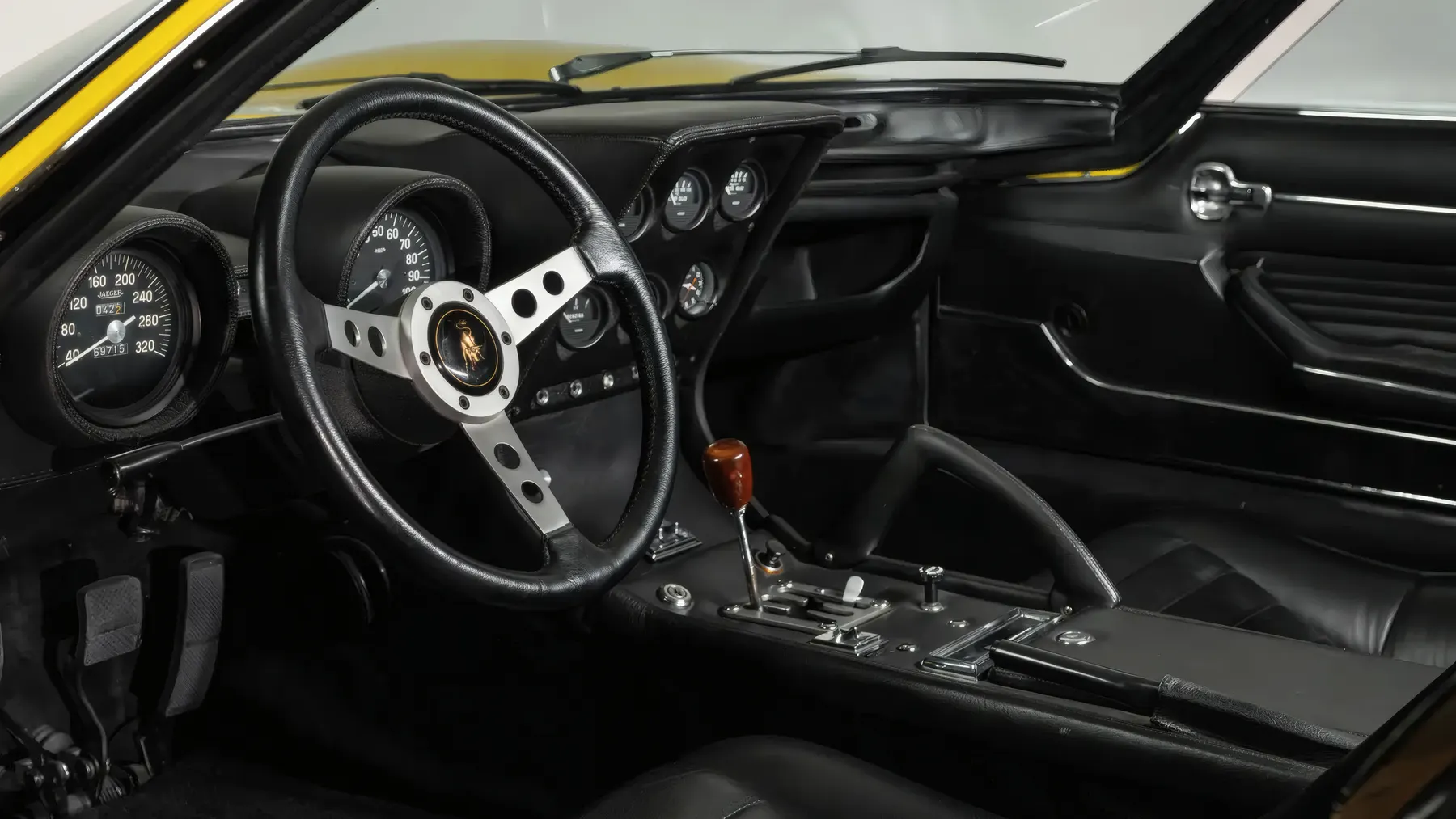
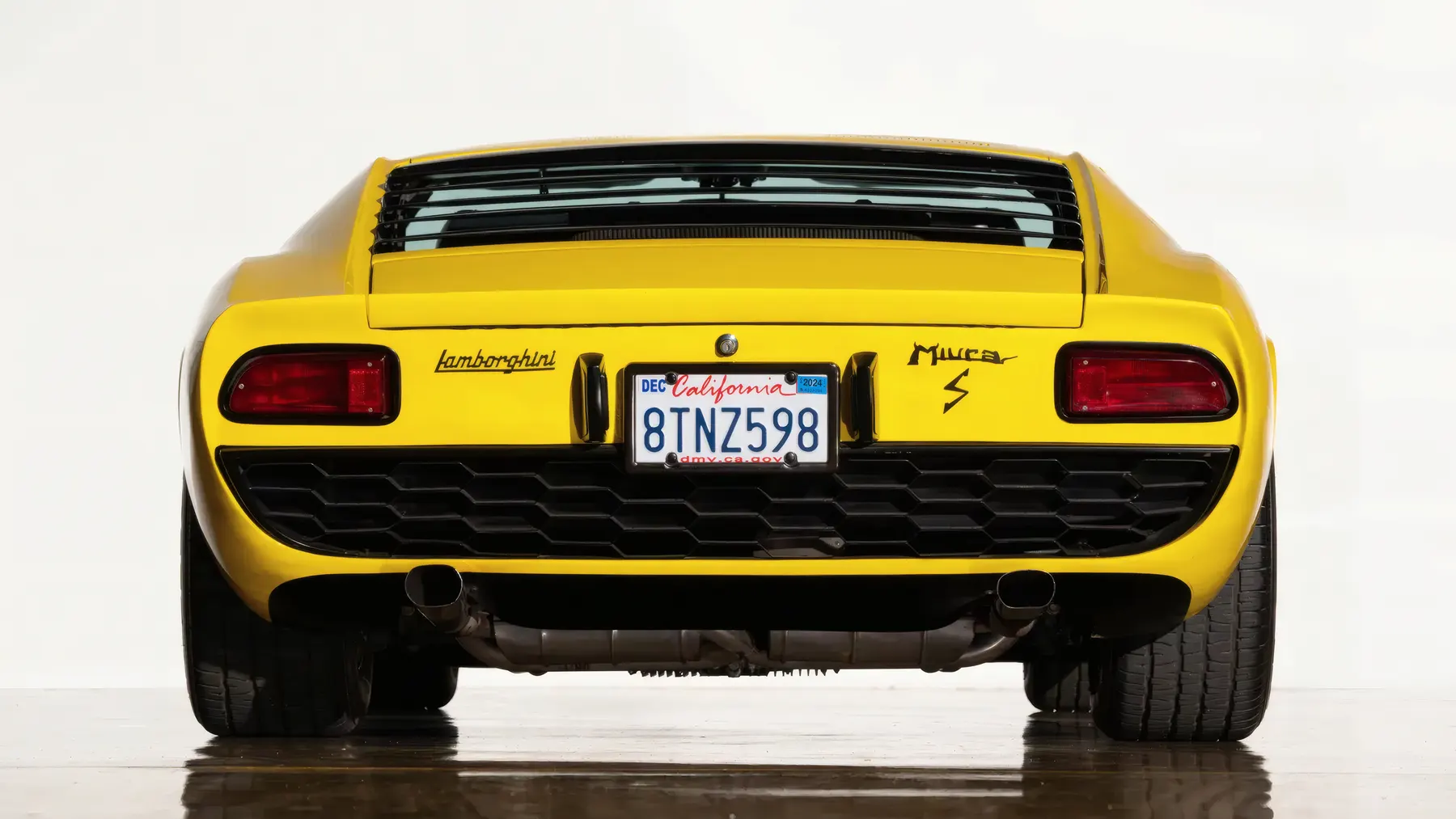
Visually, Lamborghini resisted the temptation to redesign a shape that didn’t need it. The clearest giveaway is the switch from black to chrome trim around the windscreen, side glass and headlamp bezels, along with a small “S” script added to the tail and a revised Bertone badge. Several marque historians and specialist dealers trace the letter to Spinto, roughly “pushed” or “tuned” in Italian, though the very earliest S-badged cars actually left the factory still wearing the old black surrounds, a reminder of how gradual the changeover really was. Inside, the cabin gained a redesigned overhead switch console, a lockable glovebox, and a leather-wrapped steering wheel in place of the wood-rimmed item on early cars. Power windows arrived during the S’s run and eventually became standard fitment, and Lamborghini began offering factory air conditioning for the first time on any of its cars. Buyers could also specify a fully trimmed leather interior, metallic or pearlescent paint, and a matching luggage set. Right-hand-drive conversion carried a substantial surcharge, which is largely why so few UK-market Miura S cars were built. In the United States, where the model became a genuine, if extremely rare, ownership proposition for the wealthy, a new Miura S listed at a little under 20,000 dollars.
Performance claims for the P400 S varied even at the time, and they’re worth treating with the same caution period road testers applied to them. Road & Track’s April 1970 test recorded a 5.5-second sprint to 60 mph and a genuine top speed of 168 mph, while Autocar’s test that August measured 172 mph on the same basic car; Lamborghini’s own literature and various period write-ups quoted figures as high as 177 mph. The likeliest explanation is that outright top speed depended heavily on individual car tune, gearing and how bravely a tester was willing to hold the throttle open on a public road, and none of it detracts from the fact that, in 1969, a genuine 165-plus mph road car was a startling proposition, faster in practice than almost anything else a private buyer could order.
To drive, the Miura S asks the driver to fold into a low, splay-legged position that period and modern testers alike have found ideally suited to shorter drivers and genuinely cramped for taller ones; Road & Track’s original review of an early car complained of restricted headroom for anyone above roughly 5 ft 8 in, a criticism that changed little between the P400 and the S. Once seated, forward visibility through the deeply raked, glassy screen is excellent for a car of this era, and the pedals are well placed for heel-and-toe work. The V12’s soundtrack, building toward its 7,700 rpm power peak, remains one of the great engine notes of the period, though getting there involves a shift action that early testers described as demanding, a consequence of the long, complex linkage needed to reach a gearbox mounted behind a transverse engine rather than in line with it. Cabin comfort is a genuine, well-documented weak point: Bertone’s slippery shape means remarkably little outside air reaches the cabin even with the windows down, so the combination of engine heat, exhaust routing and a low glasshouse can make the Miura S properly uncomfortable in slow traffic or hot weather, and the single-speed heater and ventilation fan fitted to early cars did nothing to help. None of this is treated as a deal-breaker by anyone who has actually driven one, but it is real, and it is exactly the sort of thing a specification sheet doesn’t capture.
The more serious limitation was aerodynamic rather than ergonomic. Gandini’s shape was sculpted entirely by eye, without wind-tunnel validation, since the tools and the mindset for that kind of testing barely existed yet in this class of car, and the consequence was genuine front-end lift at speed. Several period tests and later retrospectives describe the nose growing distinctly light above roughly 130 mph, with the steering losing precision as a result. The S’s stiffer chassis and revised suspension sharpened responses at everyday speeds and reduced the flex-induced vagueness that had marked the earliest P400s - specialist assessments of the changes describe them explicitly as an attempt to tame the original car’s high-speed instability - but none of it altered the fundamental aerodynamics of the shape, and the lift issue persisted, in modified form, right through to the SV. It’s a flaw that sits uneasily alongside the Miura’s reputation as the fastest road car of its era, and it’s worth remembering when the temptation arises to view the whole model purely through a lens of nostalgia: this was a car whose outer limits genuinely could catch out an unprepared driver.
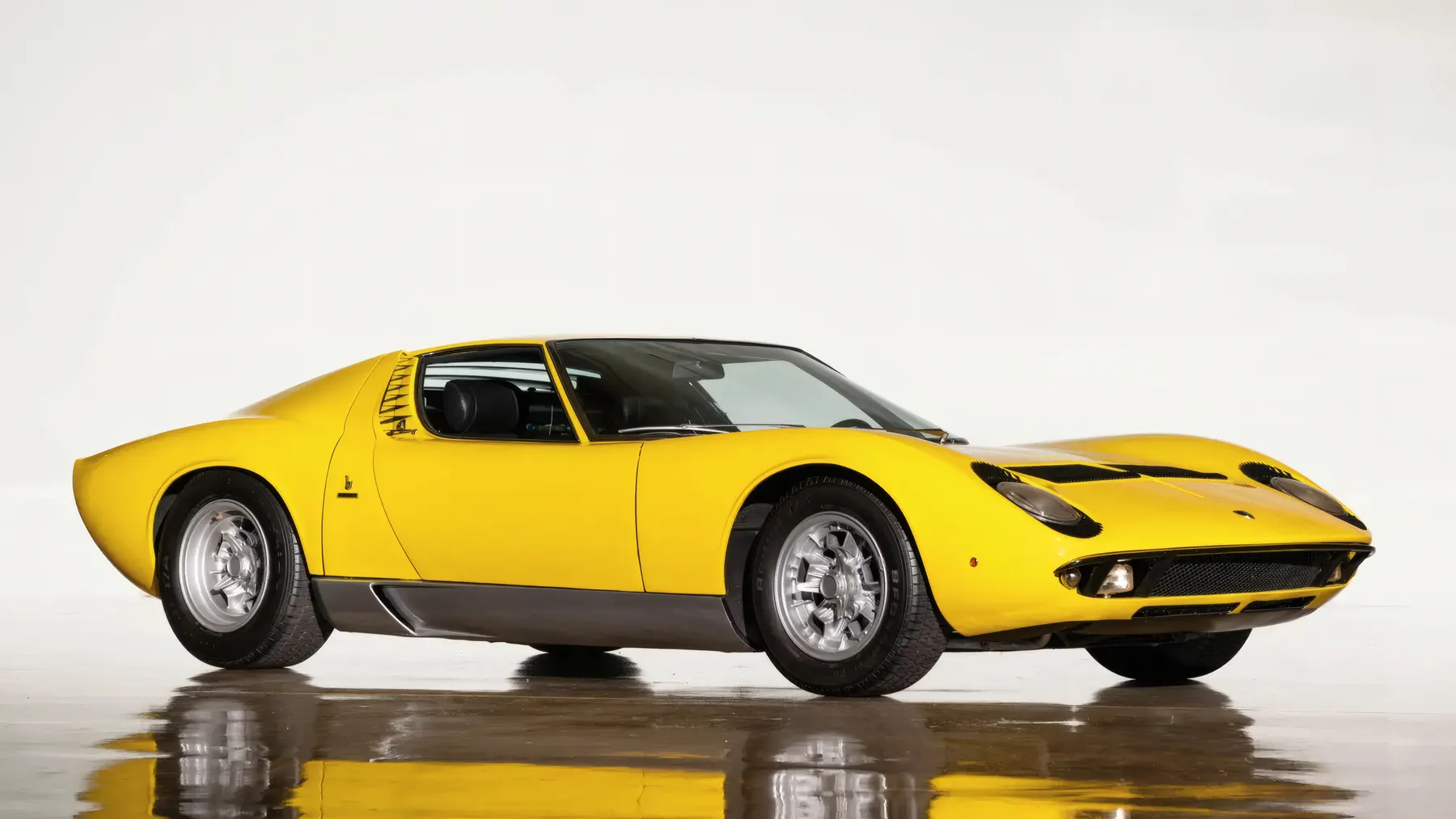
Positioned against Ferrari’s front-engined grand tourers of the same period, the Miura S represented a fundamentally different idea of what a flagship road car could be, and it kept Lamborghini’s mid-engined format at the head of a category the company had effectively invented a few years earlier. Unlike some of Ferrari’s contemporary road cars, the Miura carried no factory competition programme to lean on for marketing purposes; whatever reputation it built, it built purely as a road car, on the strength of its engineering and the sheer audacity of its layout. That mattered commercially, too. At a little under 20,000 dollars new in the United States, the Miura S sat well above the price of a Corvette or a muscle car with comparable straight-line pace, yet buyers weren’t paying for outright acceleration so much as for novelty, exclusivity and a shape that made everything else on the road look conventional by comparison. Among specialists and collectors today, the S occupies something of a sweet spot within the Miura family: it retains the eyelash-headlamp face and general purity of the original P400’s silhouette, unlike the flared, more aggressive SV, while offering meaningfully stronger brakes, suspension and engine than the car it replaced, along with a noticeably more usable, better-equipped cabin. It is neither the rawest Miura nor the most extreme, but for many who have driven the full range, it is the one that best balances the original’s shock value against something that could actually be lived with day to day.
What the P400 S ultimately demonstrates is that the Miura wasn’t a one-off act of styling bravado that Lamborghini happened to get right; it was a genuine engineering project the company kept refining, quietly and continuously, for the better part of five years. The S didn’t erase the original’s flaws - the cabin heat, the aerodynamic lift, the notchy shift action all persisted in one form or another - but it addressed enough of them to turn a sensational motor-show exhibit into a car that a demanding, wealthy customer could actually order, use and enjoy on something approaching normal terms. That’s a less romantic story than the Miura’s debut, but it’s arguably just as important to how the car, and the whole idea of the mid-engined supercar, came to be remembered.
Technical data
Specifications
| Specification | Detail |
|---|---|
| Production years | 1968–1971 (unveiled Turin Motor Show, autumn 1968; production from December 1968) |
| Number produced | 338 (widely corroborated across marque and auction sources) |
| Engine | 3,929cc naturally aspirated V12, DOHC per bank, four Weber 40IDL-3L carburettors, transversely mid-mounted |
| Power | 370 bhp @ 7,700 rpm (some sources cite ~365 bhp) |
| Torque | 287 lb-ft @ 5,500 rpm |
| Transmission | 5-speed manual transaxle, shared engine/gearbox oil sump |
| Wheelbase | 2,500 mm |
| Kerb/dry weight | Approximately 1,125–1,300 kg*; sources vary significantly and do not always distinguish dry from kerb weight |
| 0–60 mph | Approximately 5.5–6.5 seconds (period test dependent) |
| Top speed | 168–172 mph recorded in period road tests (Road & Track, Autocar); factory and press claims to 177 mph* |
| Brakes | Disc, ventilated from mid-production; Girling calipers |
| Suspension | Double wishbones front and rear, coil springs, Koni dampers (from S onward) |
| Tyres | Pirelli Cinturato radials |
| Original US list price | Approximately $19,000–20,000 (period figures vary by model year) |
Sources
- Lamborghini Official Heritage: Miura
- LamboCARS.com - 1968–1971 Lamborghini Miura P400 S Guide & History
- Supercar Nostalgia - Lamborghini Miura P400 S Guide
- Girardo & Co - 1968 Lamborghini Miura P400 S
- RM Sotheby’s - 1969 Lamborghini Miura P400 S, Monterey 2014 (model background)
- RM Sotheby’s - 1969 Lamborghini Miura P400 S, The Elkhart Collection (model background)
- RM Sotheby’s - 1969 Lamborghini Miura P400S, Miami 2026 (model background)
- RM Sotheby’s - 1969 Lamborghini Miura P400 S, The Junkyard: The Rudi Klein Collection (model background)
- RM Sotheby’s - 1969 Lamborghini Miura P400 S, Paris 2023 (model background)
- Conceptcarz - Lamborghini Miura P400
- Conceptcarz - Lamborghini Miura Model Series
- Classic Trader - Lamborghini Miura Buying Guide
- Hagerty UK - The Lamborghini Miura Is the Dictionary Definition of a “Supercar”
- Hagerty Media - Lamborghini Miura Design Brief: La Supercar Originale
- Curbside Classic - Vintage Road & Track Test: 1968 Lamborghini Miura
Join the discussion
Comments
Loading comments…
Leave a comment
Share a detail, memory, or perspective. Every comment is reviewed before publication.