Ferrari 512 TR: How Maranello Reengineered the Testarossa's Flaws
1992 Ferrari 512 TR

Images: Keno Zache / RM Sotheby's
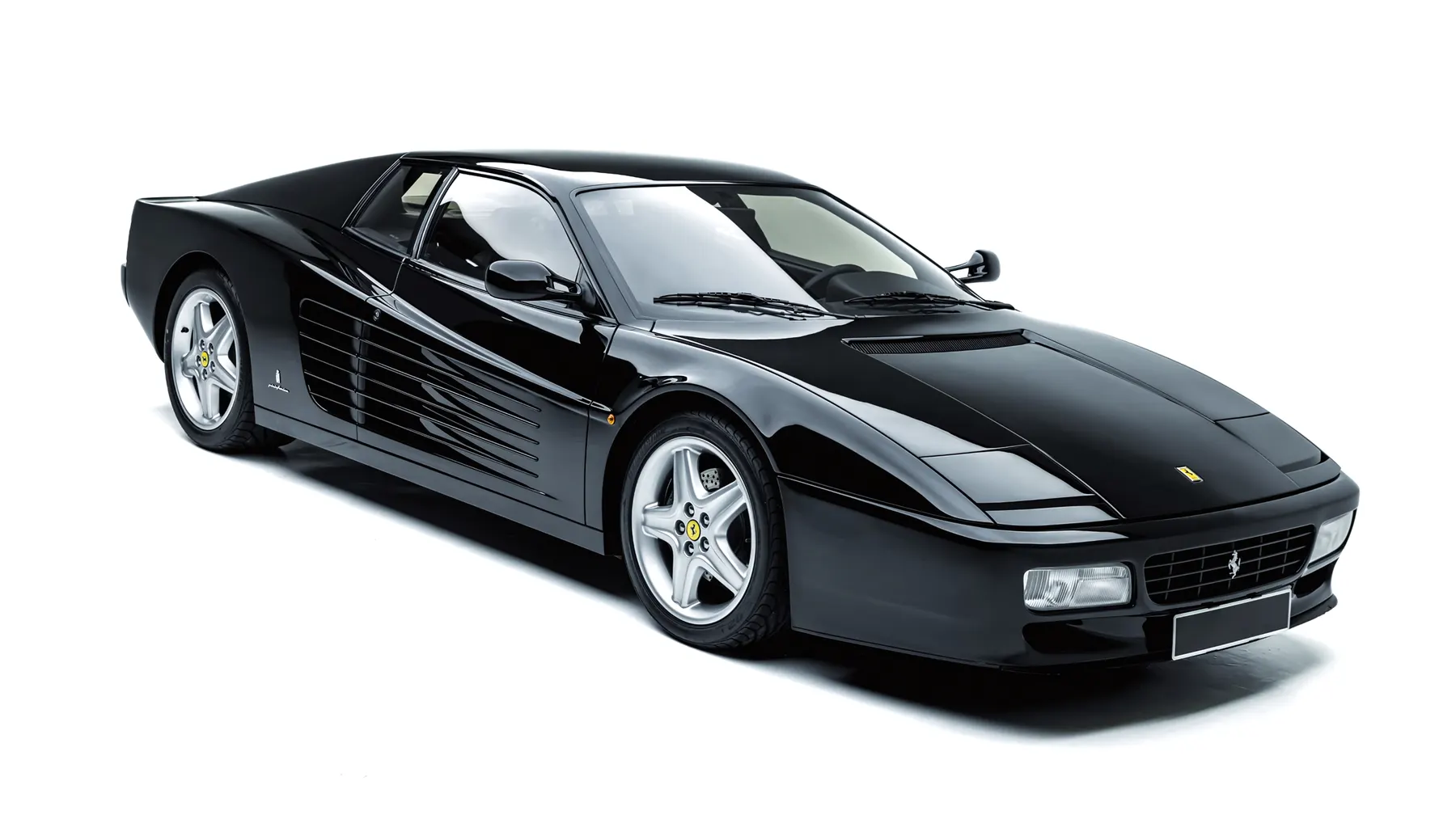
When Ferrari’s engineers stood up at Fiorano in early 1992 to explain what they had done to the Testarossa, the most telling detail was what they had been told to leave alone: the silhouette. Pininfarina’s swooping, strake-flanked wedge, unveiled to a nightclub full of Parisian glitterati ahead of the 1984 Paris motor show, was by then the most recognisable Ferrari shape on the planet, plastered across bedroom walls and video game cabinets in equal measure. Ferrari’s problem wasn’t how the car looked. It was almost everything else - a chassis balance that testers found genuinely difficult to trust, a driving position inherited wholesale from the original, and a growing sense that eight years was a long time to ask one silhouette to keep earning its keep against fresher opposition. The result was the 512 TR: a car so visually conservative that showroom customers could mistake it for the model it replaced, wrapped around a mechanical package reworked almost everywhere it mattered.
The Testarossa itself had arrived in 1984 as successor to the 365 GT4 Berlinetta Boxer and 512 BB, inheriting their flat-12 layout but solving a packaging problem that had dogged both predecessors: the 512 BB’s front-mounted radiators ate into cabin and luggage space and complicated cooling. Ferrari’s fix was to move the radiators out to the flanks, feeding them through the enormous side strakes that became the car’s defining visual signature, and in the process making the Testarossa roughly 152mm wider at the rear than the car it replaced. It was a solution born of engineering necessity that happened to photograph brilliantly. Underneath the drama, though, the mid-mounted flat-12 sat above the gearbox in a layout that kept the crankshaft higher than ideal, and more than 7,000 examples went out into the world with handling that period testers described as demanding real respect at speed, and, less charitably, as sloppy and hard to predict once grip finally ran out.
By the time Ferrari began planning the update, the ground had shifted under the entire supercar market. The classic car boom of the late 1980s had pushed early Testarossas to absurd premiums - reportedly as much as 500 percent over list price at the market’s 1990 peak - before the bubble burst spectacularly. By mid-1992, unregistered examples were selling for roughly 30 percent below their original list prices, a collapse severe enough to threaten several specialist manufacturers and to make Ferrari’s own comparatively healthy position look like a triumph by default. Into that uncertain climate arrived Lamborghini’s Diablo in 1990, a genuinely new design that made the ageing Testarossa look, for the first time, like yesterday’s supercar. Ferrari’s answer wasn’t a clean-sheet replacement but a thorough, unusually deep reworking, unveiled at the Los Angeles Auto Show in January 1992, with the first customer cars - mostly US-bound - already reaching buyers the previous December.
The new car’s name signalled the shift from style to substance. Ferrari returned to a numeric-and-letter designation from decades earlier: “5” for the engine’s five-litre-class capacity, “12” for its cylinder count, and “TR” borrowed directly from Testarossa - Italian for “red head,” itself a nod to the red-crackle cam covers that traced back to Ferrari’s sports-racing cars of the 1950s and '60s. Underneath, the tubular steel chassis was substantially revised, gaining a new Tipo F110 HB designation and, according to the factory, around 13 percent more torsional rigidity than the outgoing structure, partly through oval-section tubing in the centre section borrowed from the F40 programme. Just as significant was where everything sat: engineers dropped the engine and gearbox assembly by roughly 30mm within the chassis, lowering the centre of gravity and improving the polar moment of inertia, even if the fundamental crankshaft-above-transaxle layout, and the packaging compromise that came with it, could never be fully engineered away.
The flat-12 itself, now catalogued as the Tipo F113 D 040, kept its 4,943cc displacement and 82mm-by-78mm bore and stroke, but very little else about it was untouched. New pistons raised the compression ratio to 10.0:1, up from roughly 9.2 or 9.3:1 depending on which factory documentation is consulted, and the old Bosch K-Jetronic mechanical injection gave way to a fully electronic Motronic M2.7 system. Redesigned inlet plenums, enlarged valves and reprofiled camshafts improved breathing, while smaller, more efficient side radiators freed up space in the flanking ducts for revised intake trunking that Ferrari’s engineers claimed produced a mild ram-air effect at speed. The net result was 428bhp at 6,750rpm for European-market cars and 421bhp at the same engine speed for the catalyst-equipped US versions, with torque climbing to around 362 lb-ft at 5,500rpm - a useful jump over the outgoing Testarossa’s 390bhp and 354 lb-ft, enough to trim the sprint to 62mph to a claimed 4.8 seconds and lift the factory top speed claim to around 195mph.
Drive still went through a five-speed manual gearbox with a dogleg first-to-second shift, worked through Ferrari’s open aluminium gate - one of the genuine highlights of the car, tactile in a way few modern gearboxes bother to be. Period accounts differ on one detail here: Ferrari’s own engineers described the transmission as switching from the Testarossa’s twin-plate clutch to a single-plate design, while other technical summaries describe the 512 TR as retaining a twin-plate clutch, so this remains a point on which sources disagree. What isn’t disputed is the rest of the running gear: bigger cross-drilled, ventilated brake discs (315mm at the front, 310mm at the rear), a switch from 16-inch to 18-inch wheels wearing a new five-spoke design, and a limited-slip differential fed by a stronger diff casing introduced partway through production. A switchable anti-lock braking system arrived for 1993 alongside a change of alternator and starter motor supplier, while 1994 cars gained that stronger differential and swapped the two-piece Pininfarina flank badge for a single unit.
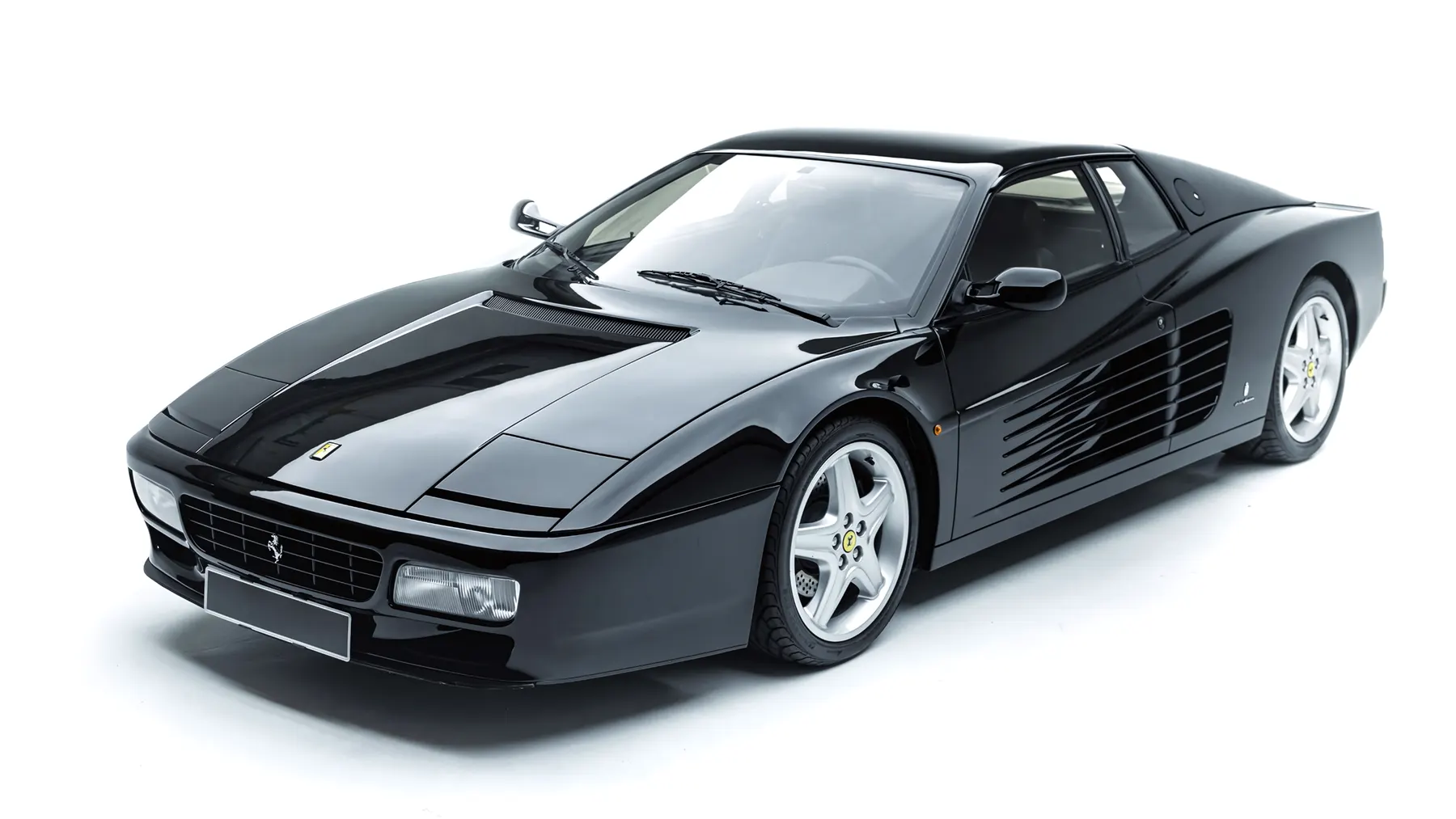
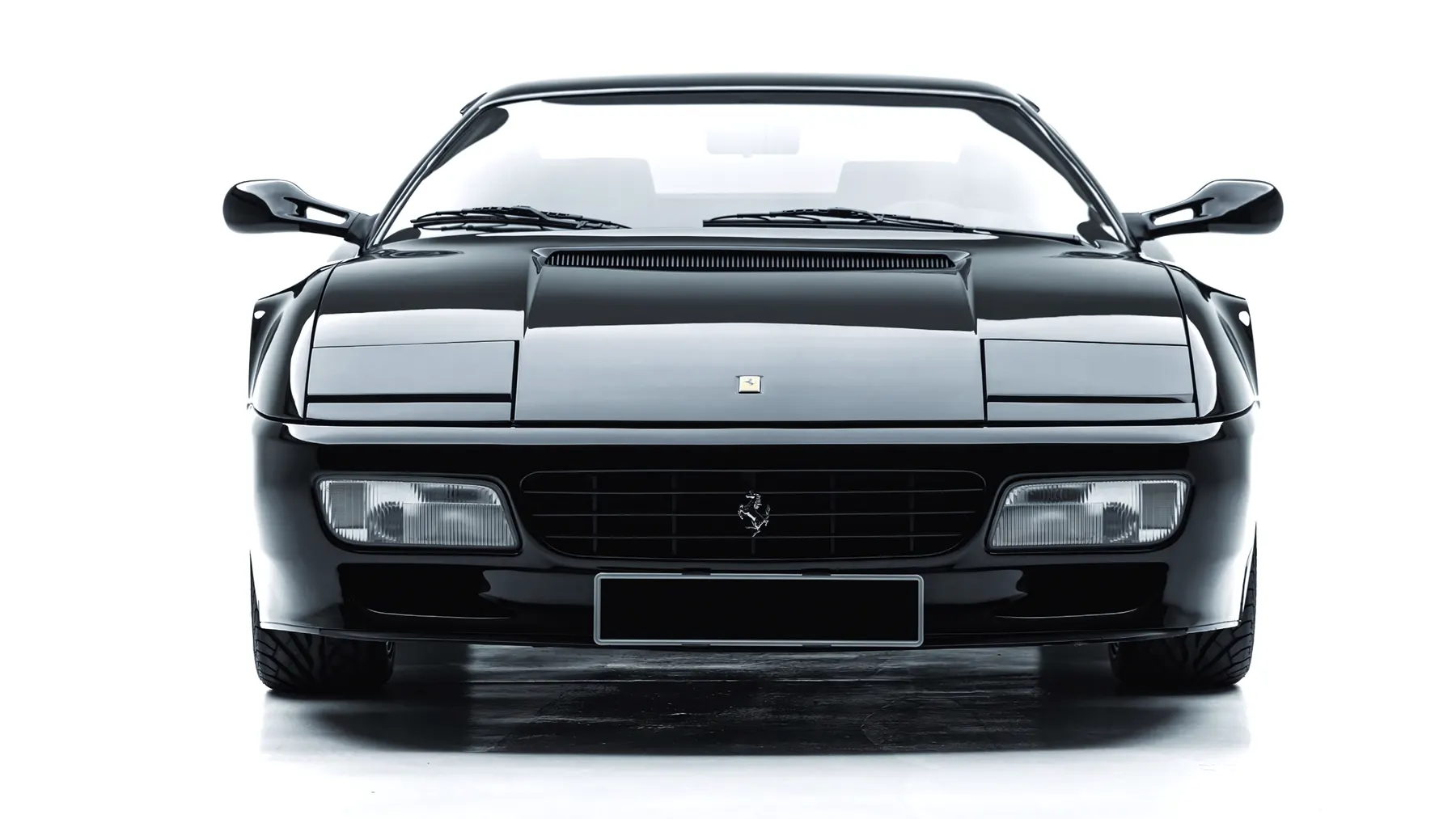
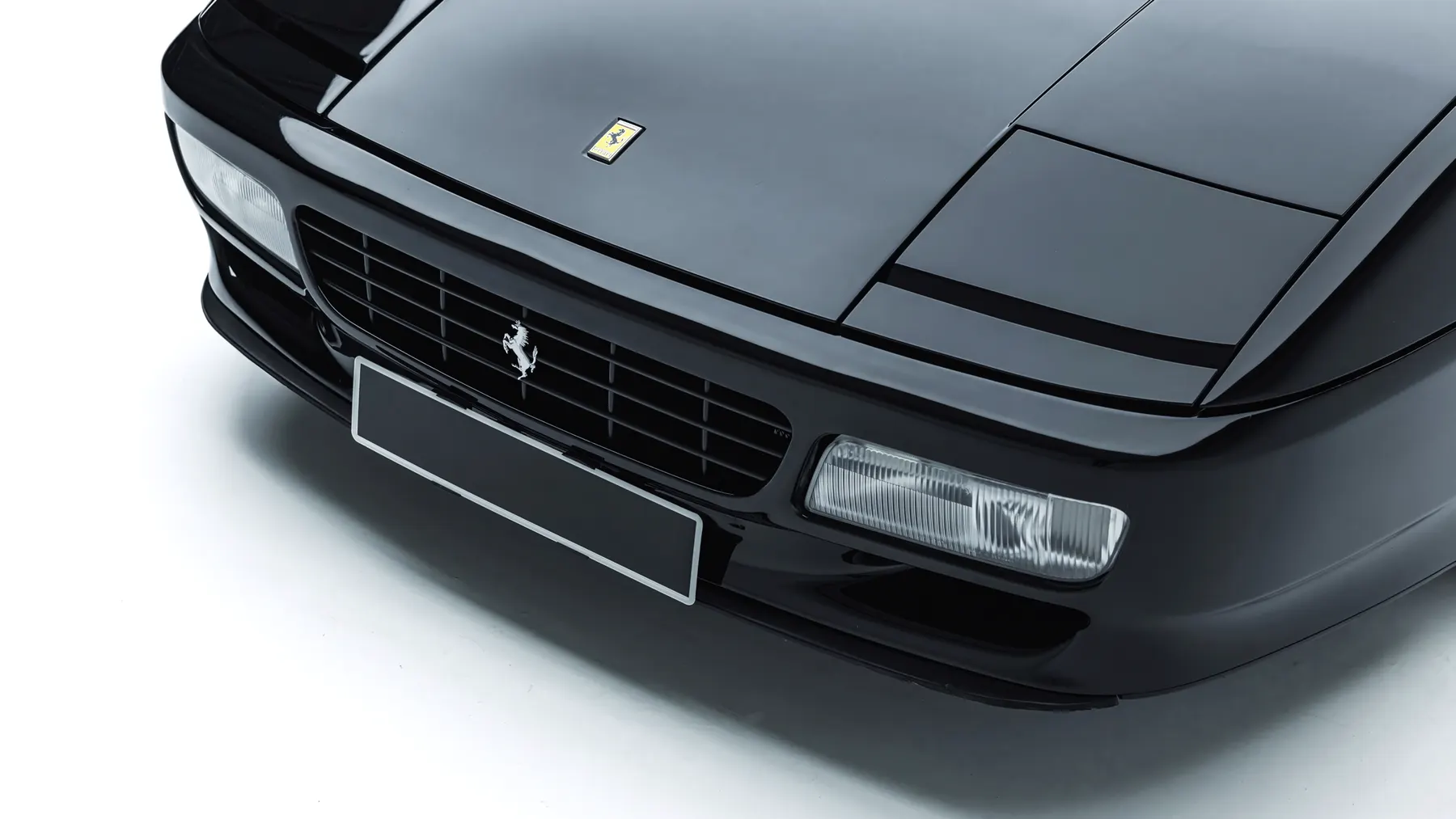
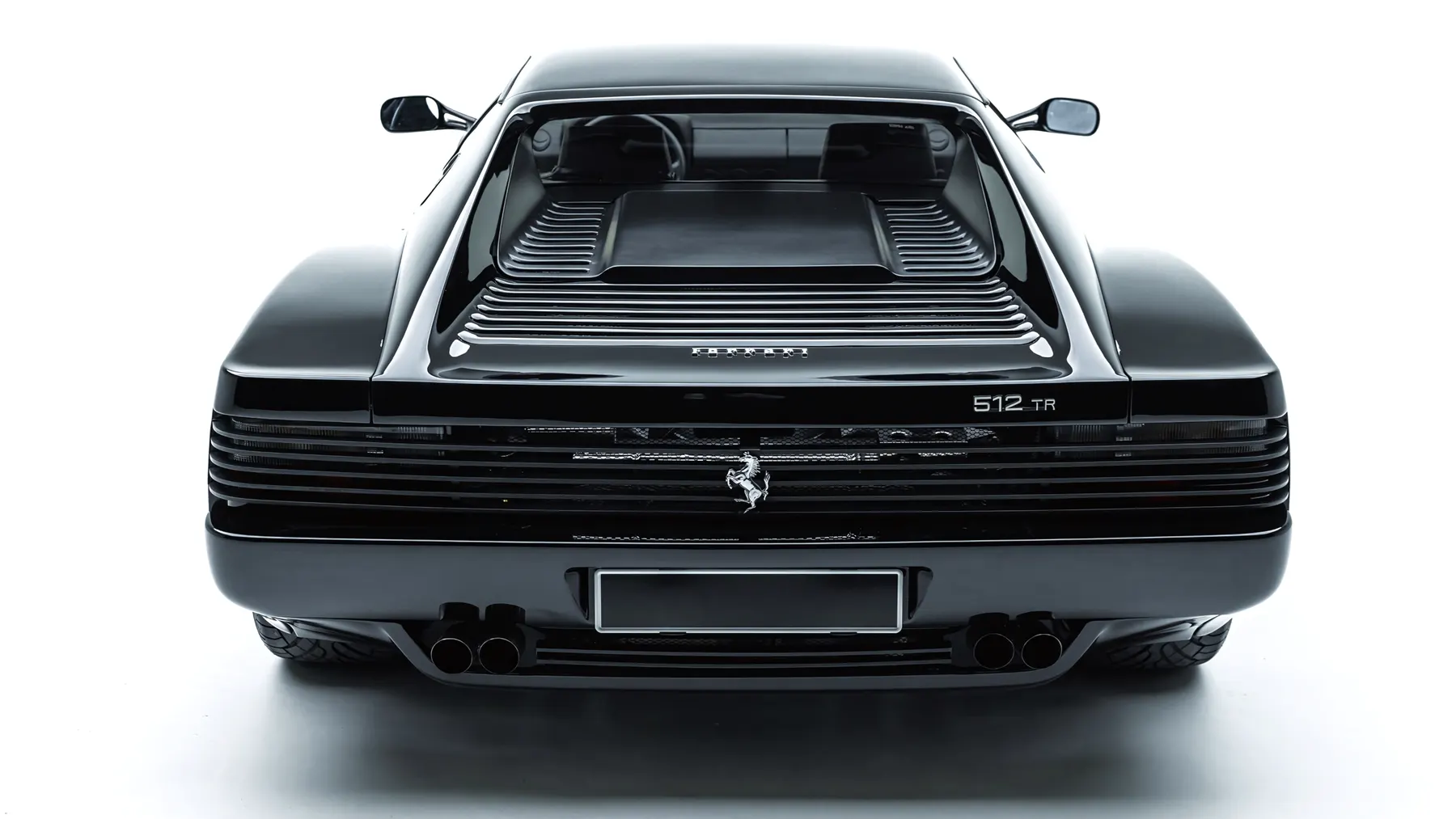
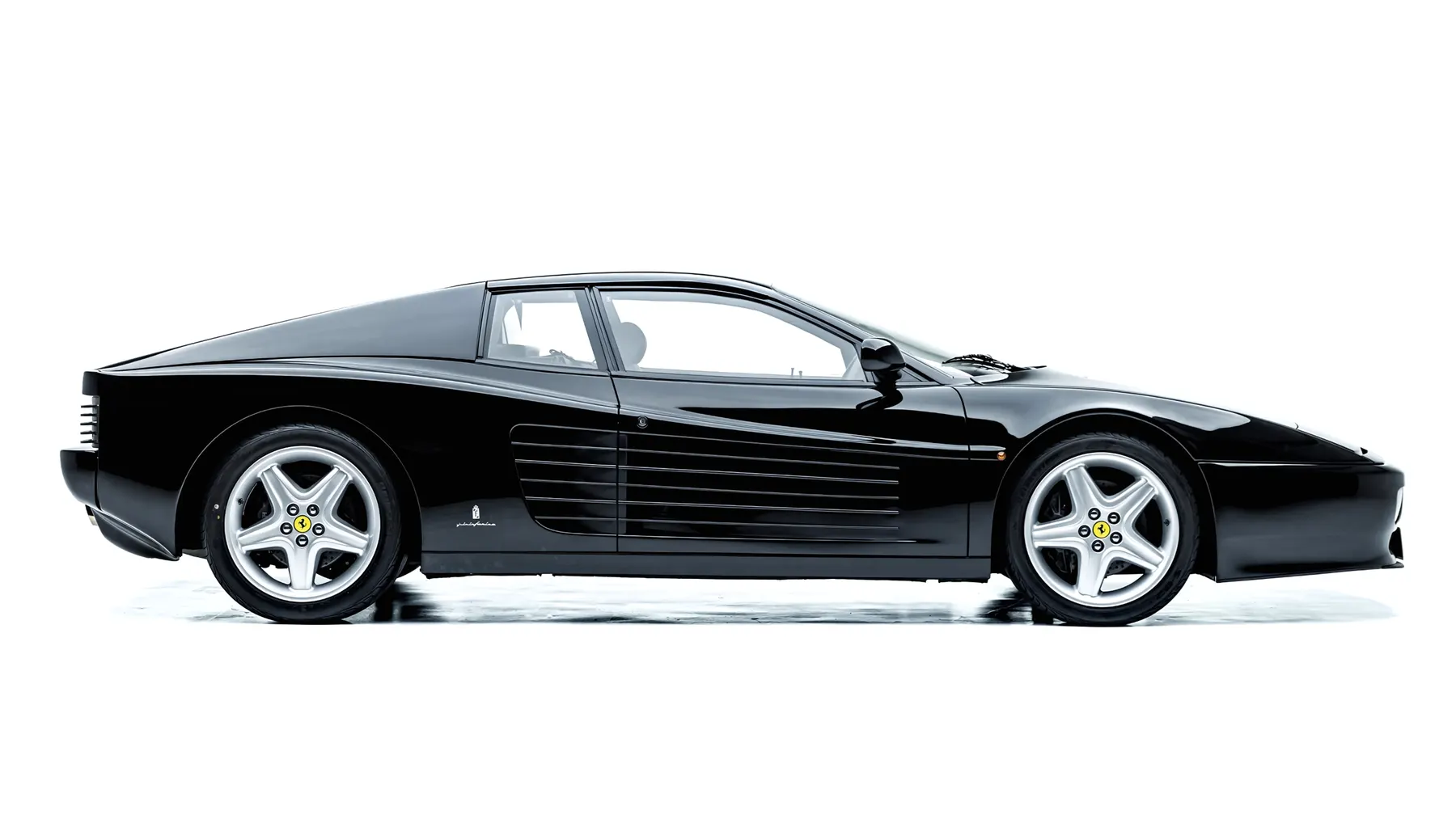
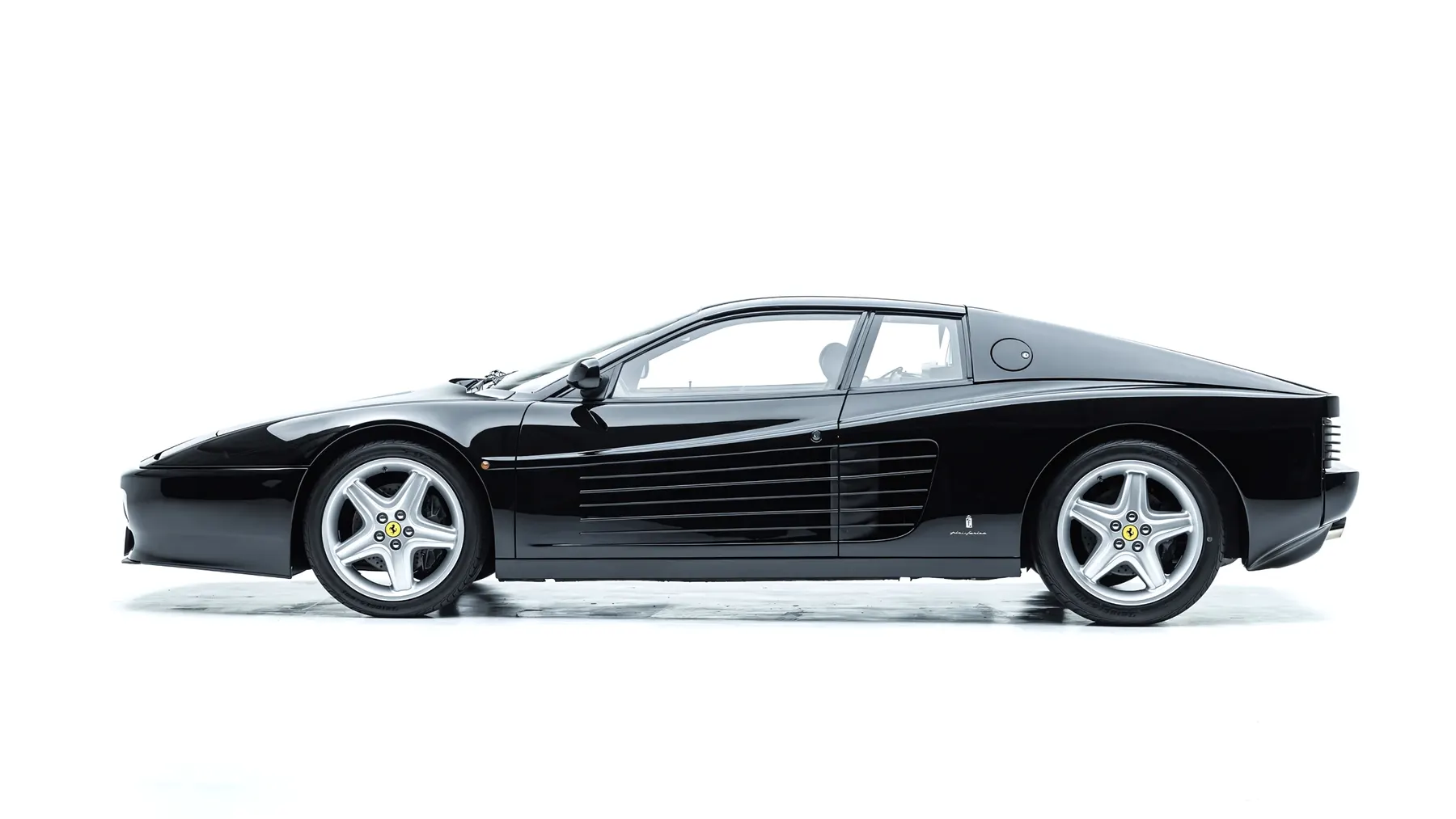
Pininfarina’s brief for the bodywork was deliberately narrow, and the design house made the most of it. The single sheet-metal change was a new, lower engine cover, enabled by the powertrain’s drop in the chassis, with a less pronounced power bulge and a reshaped satin-black louvre treatment. A new front bumper brought a smaller, rounder grille echoing the contemporary 348, a discreet chin spoiler with brake-cooling ducts, and body-colour sills and apron in place of the Testarossa’s satin black. At the rear, a redesigned bumper and smoked light clusters tidied up a tail that otherwise kept its slatted signature intact, now wearing a chromed Cavallino badge and a 512 TR script rather than the old car’s raised, body-colour centre panel. Overall length shrank by 5mm and height by a similar margin, differences invisible to anyone who wasn’t measuring, while the trademark side strakes, sail-panel buttresses and wedge profile carried over essentially unchanged, precisely as instructed. In a small irony nobody at Maranello seemed to mind, early cars left the factory with a “Testarossa” badge still fixed to the new engine cover, sitting alongside the 512 TR script meant to announce the name change.
Inside, the changes ran deeper than the exterior suggested. A new dashboard and centre console replaced the Testarossa’s curling, wraparound design with a flatter layout and a small, tacked-on instrument panel housing the clock, fuel gauge and oil-temperature readout. The seats were mounted 130mm lower, trimmed in leather as before, alongside a new three-spoke steering wheel and an updated climate-control system. Air-conditioning, electric windows, electric mirrors and a stereo, hidden as ever behind a pop-up panel, were all standard, and buyers could specify a set of Schedoni luggage designed to strap in behind the seats, three-piece split-rim wheels, or a space-saver spare in place of the full-size unit tucked under the bonnet.
On the road, and particularly around Fiorano, the changes proved themselves. Contemporary testers who drove the 512 TR back-to-back with an outgoing Testarossa reported a car that rolled less through corners, with front and rear axles working in far closer harmony; where the old car’s oversteer had arrived as a sudden, imprecise slide once grip ran out, the 512 TR’s tail broke away with noticeably more warning and control. There was more initial understeer than before, edging toward neutral as speed built, and the brakes, despite feeling slightly short on outright pedal feel, could reportedly withstand ten flat-out laps of Fiorano without fading. The unassisted steering, heavy enough at parking speeds to demand real effort, lightened progressively and communicated well once underway, and the ride, helped by lower pressures in the taller 18-inch tyres, proved unexpectedly compliant on rough roads for a car riding on such stiff springing. But it was the engine that testers kept returning to: capable of pulling cleanly from idle-like revs in top gear, yet turning explosively urgent as the needle swept toward a 7,000-plus-rpm redline, with a voice that period journalists reached for superlatives to describe. Few flat-12s, before or since, have matched it for sheer engineering charisma.
None of which excuses how compromised the cabin remained. The driving position, inherited almost entirely from the Testarossa, drew genuine frustration from testers rather than affectionate shrugs: legs angled awkwardly toward the car’s centreline to clear the wide transmission tunnel and a front wheel housing that ate into the footwell, pedals set uncomfortably close, a non-reach-adjustable steering wheel that sat too far away regardless of seat position, and, despite the lowered seats, headroom tight enough that taller drivers brushed the roof lining. The left footrest, in particular, offered barely enough room for anyone without unusually small feet, a problem that traced directly back to a body designed around early-1980s proportions rather than a modern ergonomic study. Around town, the heavy clutch and unassisted steering, combined with a turning circle that was anything but tight, made a car that was still, at more than two metres wide, a genuine handful in traffic - exterior dimensions having carried over from the Testarossa essentially unchanged. And for all the chassis improvements, the 512 TR’s handling still asked more of its driver, and rewarded less outright precision, than Honda’s NSX, a car costing a fraction of the price that had, by 1992, already proven a mid-engined supercar didn’t have to be intimidating or physically demanding to be genuinely fast. Buyers chasing everyday usability or contemporary ergonomics had a better, cheaper answer sitting in Honda showrooms; what the 512 TR offered instead was theatre, flat-12 drama and a very specific kind of old-world physicality the NSX had deliberately engineered away.
Away from the standard run, Ferrari and its dealer network sanctioned a small number of special-order variants. Fifteen 512 TR Speciale examples were built for the Japanese market to mark fifteen years of Cornes & Co. as the country’s official importer, finished in a dark metallic red with a Scuderia Ferrari shield on each front wing and fitted with the optional three-piece split-rim wheels. Separately, Pininfarina converted a small batch of coupés into open Spider Speciale form, including some right-hand-drive examples. These remained rare, low-volume factory-sanctioned projects rather than a regular production variant, and they underline how far outside the mainstream even minor deviations from the standard 512 TR sat.
Production ran from late 1991 through 1994, with Ferrari’s own factory records putting the final tally at 2,261 cars built in a continuous chassis sequence, of which 88 were right-hand-drive examples destined for the UK. Despite launching into a bruised luxury market against a genuinely all-new Diablo, the 512 TR reportedly outsold its Lamborghini rival by roughly three to one, a result owing as much to Ferrari’s brand strength and dealer network as to any single dynamic advantage. Positioned within Maranello’s range alongside the V8-engined 348, the Mondial t and the far more hardcore F40, the 512 TR settled into a role as flagship GT rather than outright weapon: a car for fast, sustained cross-continental driving rather than track ambition, with no factory competition programme of its own, unlike the racing-oriented 512 BB LM that had campaigned a generation earlier.
The 512 TR’s run ended in 1994, when the F512 M, “M” for modificata, took over, dropping the pop-up headlights for fixed units to satisfy tightening safety regulations, switching to circular tail lights, and pushing power to a claimed 440 metric horsepower, roughly 434bhp, through titanium connecting rods and a higher compression ratio. Only 501 F512 Ms were built before Ferrari retired the mid-engined flat-12 format entirely in 1996 in favour of the front-engined V12 550 Maranello, a car that consciously reconnected Ferrari’s range-topping GT with the 365 GTB/4 Daytona rather than the Testarossa’s Boxer-derived lineage. Across all three names - Testarossa, 512 TR and F512 M - Ferrari built close to 10,000 mid-engined flat-12 cars over roughly twelve years, making the family among the most commercially successful V12-engined Ferraris ever built, whatever reservations period critics held about any individual version’s manners. The 512 TR was never quite the car that silenced every complaint levelled at the shape it wore; it inherited a body designed around a 1980s packaging solution and a cabin that no amount of Bosch electronics could fully redesign around. What it did do, more successfully than anyone outside Maranello expected, was prove the flat-12 Testarossa formula still had genuine dynamic substance left in it - that a facelift, taken seriously enough, could functionally rescue a car whose reputation had started to outpace its ability to actually satisfy a demanding driver.
Technical data
Specifications
| Specification | 512 TR — European-market | 512 TR — US-market |
|---|---|---|
| Engine | 4,943cc DOHC 48-valve flat-12, dry sump (Tipo F113 D 040) | same |
| Bore x stroke | 82mm x 78mm | same |
| Compression ratio | 10.0:1 (up from approx. 9.2–9.3:1*) | same |
| Fuel/ignition | Bosch Motronic M2.7 | same |
| Power | 428bhp @ 6,750rpm | 421bhp @ 6,750rpm |
| Torque | approx. 362 lb-ft @ 5,500rpm* | not separately documented in sources used |
| Transmission | 5-speed manual, dogleg gate, limited-slip differential | same |
| Suspension | independent double wishbones, coil springs, twin dampers per side (rear), anti-roll bars front and rear | same |
| Brakes | 315mm front / 310mm rear, ventilated and cross-drilled discs | same |
| Wheels | 18-inch five-spoke alloy, 8J front / 10.5J rear | same |
| Tyres | 235/40 ZR18 front / 295/35 ZR18 rear | same |
| 0–62mph | 4.8 seconds (factory claim) | same |
| Top speed | approx. 195mph (factory claim) | same |
| Kerb weight | approx. 1,470–1,473kg* | same |
| Wheelbase | 2,550mm | same |
| Production | 2,261 units, late 1991–1994 (chassis 89100–99743), incl. 88 RHD UK cars |
Sources
- Ferrari.com - 512 TR (1991) Heritage Page
- Ferrari Magazine - The Testarossa Triumvirate
- Supercar Nostalgia - Ferrari 512 TR Guide
- WhichCar/Wheels - 1992 Ferrari 512 TR Review: Testarossa 2.0
- Shannons Club - Ferrari 512 TR: The Quick and the Red (Wheels magazine archive road test)
- Hagerty Valuation Tools - 1994 Ferrari 512 TR Base
Join the discussion
Comments
Loading comments…
Leave a comment
Share a detail, memory, or perspective. Every comment is reviewed before publication.