Ferrari F512 M: Best-Driving Testarossa, Worst-Loved Face
1996 Ferrari F512 M

Images: Keno Zache / RM Sotheby's
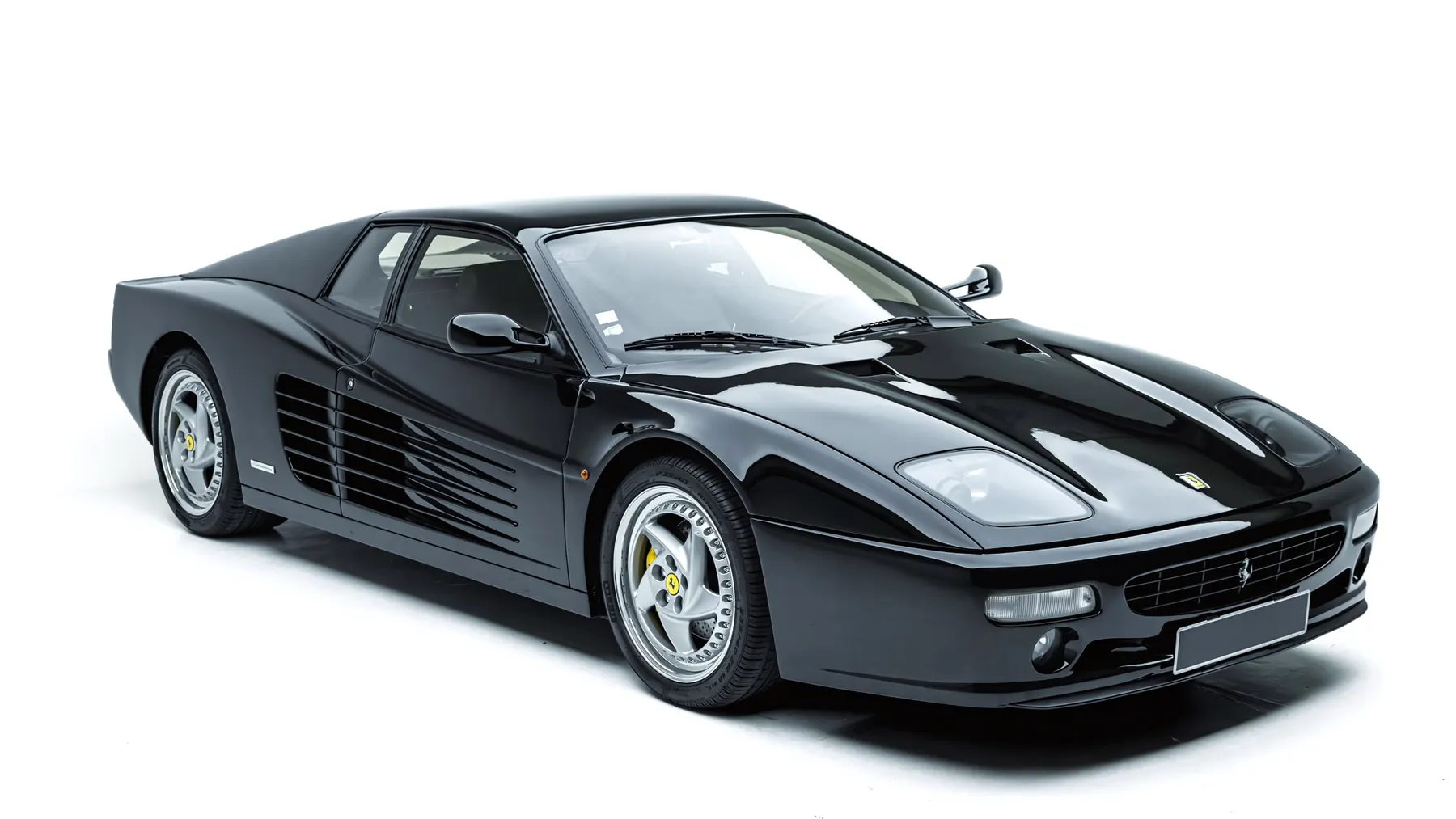
By 1994, Ferrari had spent twenty-three years refining a single idea: a flat-twelve engine slung low behind the driver, wrapped in Pininfarina bodywork descended from the 365 GT4/BB concept shown at the 1971 Turin Salon. The F512 M was meant to be the final word on that idea, and it very nearly was. Within two years Ferrari would abandon the mid-engined, flat-twelve-powered road car altogether, retreating to a front-engined V12 for its flagship grand tourer and handing the mid-engine slot to V8s and the occasional halo car. Getting there meant modernising a body style that had barely changed since the original Testarossa arrived a decade earlier, and Pininfarina’s attempt to do so produced one of the more argued-over faces in the marque’s history, wrapped around what most who drove it agreed was the best-sorted chassis the Testarossa family ever offered.
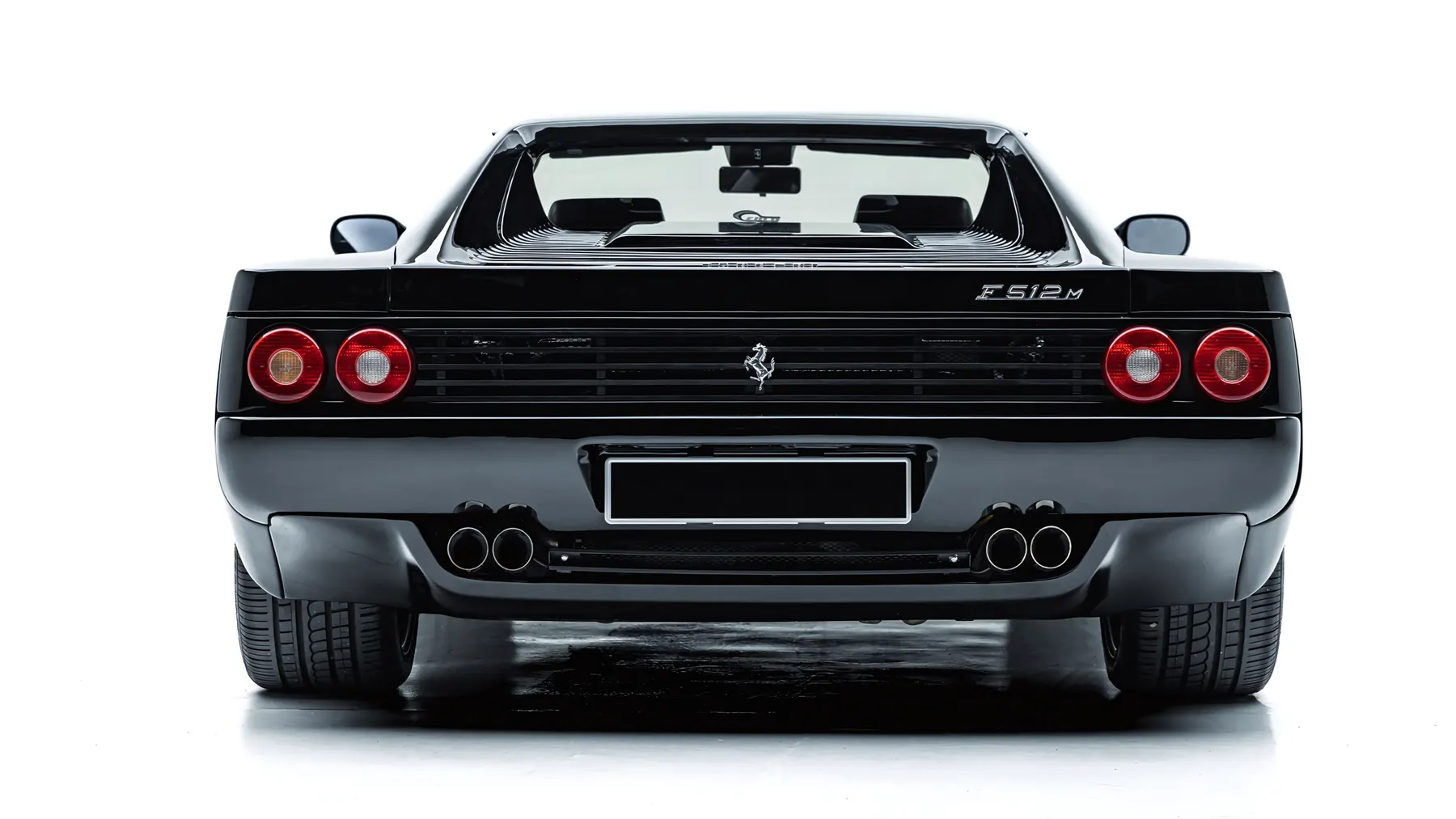
The car was presented at the Paris Salon in autumn 1994 as a direct replacement for the 512 TR, and its badge told a small story of its own. Ferrari had recently begun prefixing model numbers with “F”, and the “M” that followed stood for Modificata, a designation borrowed from the early-1970s 512 S sports-prototype racers that were upgraded mid-career into 512 M competition cars for the closing rounds of Ferrari’s World Sportscar Championship effort. It was a deliberate echo, and an appropriate one, because the F512 M really was closer to a thorough mid-life update than an all-new model. Underneath, it shared its 2,550mm-wheelbase tubular steel spaceframe, its double-wishbone suspension layout and the great majority of its mechanical architecture with the 512 TR it replaced.
The F512 M’s showroom life fell in the middle of one of the more transformative stretches in Ferrari’s history. The V8-engined F355 had just landed, the four-seat 456 GT had reopened the front-engined V12 grand tourer segment, and the V12-powered F50 halo car was on its way. Against that backdrop, a model whose spaceframe chassis and basic silhouette dated to the early 1970s inevitably read as the outgoing generation rather than the new one, and Pininfarina’s decision to borrow F355 and 456 styling cues for the facelift only underlined how far the rest of the range had moved on. Rarity split unevenly by market, too: of the 501 cars built, 75 were right-hand drive, but only 41 of those were UK-registered, making the F512 M noticeably scarcer on British roads than either the 512 TR, of which 88 UK right-hand-drive cars were sold, or the original Testarossa, with 438 UK cars, that preceded it.
The area Ferrari worked hardest on was the engine. The familiar 4.9-litre flat-twelve - 4,943cc from an 82mm bore and a 78mm stroke, four valves per cylinder, dry-sumped and mounted low and longitudinally amidships - carried over its basic architecture from the 512 TR, but gained a lightened crankshaft, titanium connecting rods and new pistons that raised compression from 10.0:1 to 10.4:1. Fed by the same Bosch Motronic M2.7 engine management and exhaling through a new low-back-pressure stainless exhaust, European-market cars produced 440bhp at 6,750rpm and 368lb-ft of torque at 5,500rpm, gains of 12bhp and 6lb-ft over the 512 TR. American-market cars, running a reduced 10.1:1 compression ratio to suit local fuel and emissions requirements, made a more modest 432bhp at the same engine speed. Drive went through an unchanged five-speed manual gearbox and limited-slip differential, though Ferrari revised the synchromesh and shift linkage for a noticeably slicker action.
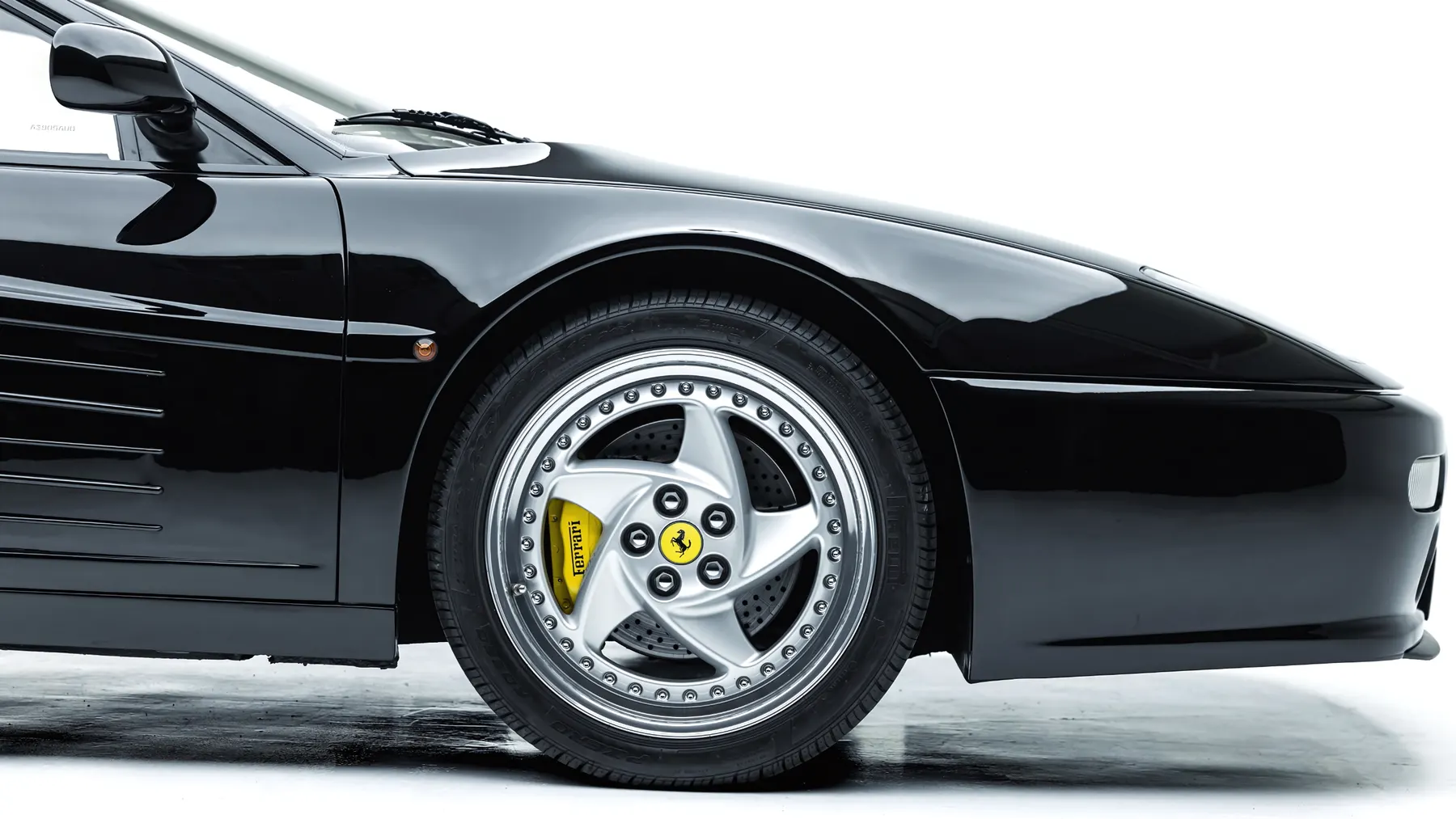
Weight-saving ran through the rest of the car too. Aluminium replaced steel for the front and rear wings, the engine cover switched to glass-reinforced plastic, and detail changes to the crankshaft and internals shed further mass from the engine itself, together bringing kerb weight down to around 1,455kg - some 18kg less than the 512 TR and, on one specialist estimate, roughly 45kg under a well-specified original Testarossa. Suspension remained double wishbones all round with coil springs, but the F512 M gained lightweight Koni dampers, aluminium spindle hubs and aluminium anti-roll-bar carriers, while the existing 315mm front and 310mm rear cross-drilled, ventilated discs now worked with a Bosch anti-lock system that had only been fitted partway through 512 TR production. New split-rim alloy wheels - 18x8 inches at the front, 18x10.5 inches at the rear, styled with a nod to the 1989 Mythos concept car and shaped to help cool the brakes - were standard, though buyers who found them too radical could specify the curved-spoke 512 TR pattern at no cost. The combination lifted top speed by a claimed 1mph to 196mph and trimmed the 0-62mph time to 4.7 seconds, modest gains on paper that specialists and period reviewers nonetheless agreed translated into a noticeably more cohesive car to drive hard. One detailed buyer’s guide covering the whole Testarossa family concluded that the 512 TR had already sharpened up the original Testarossa considerably, and that the F512 M sharpened things further still.
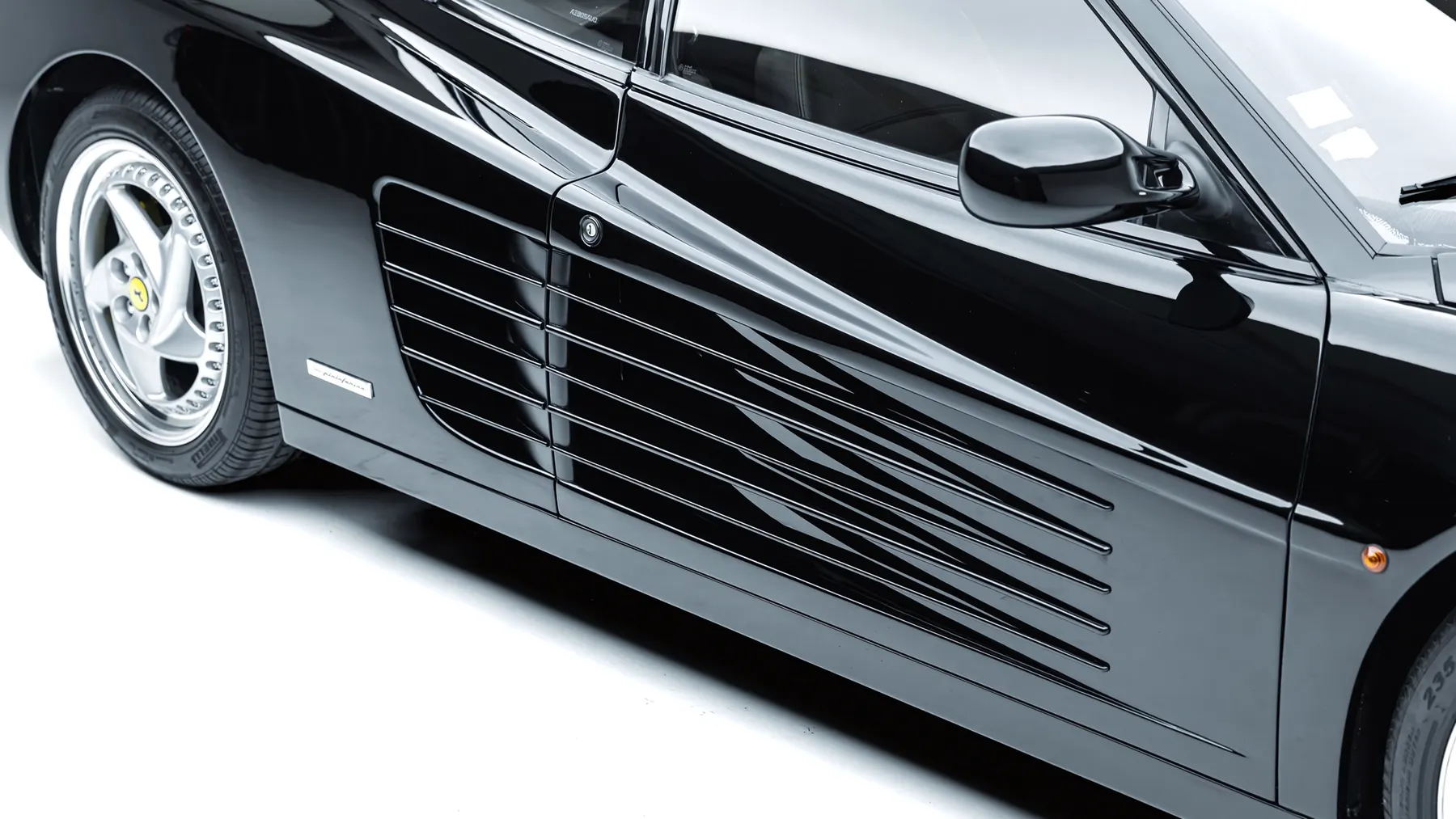
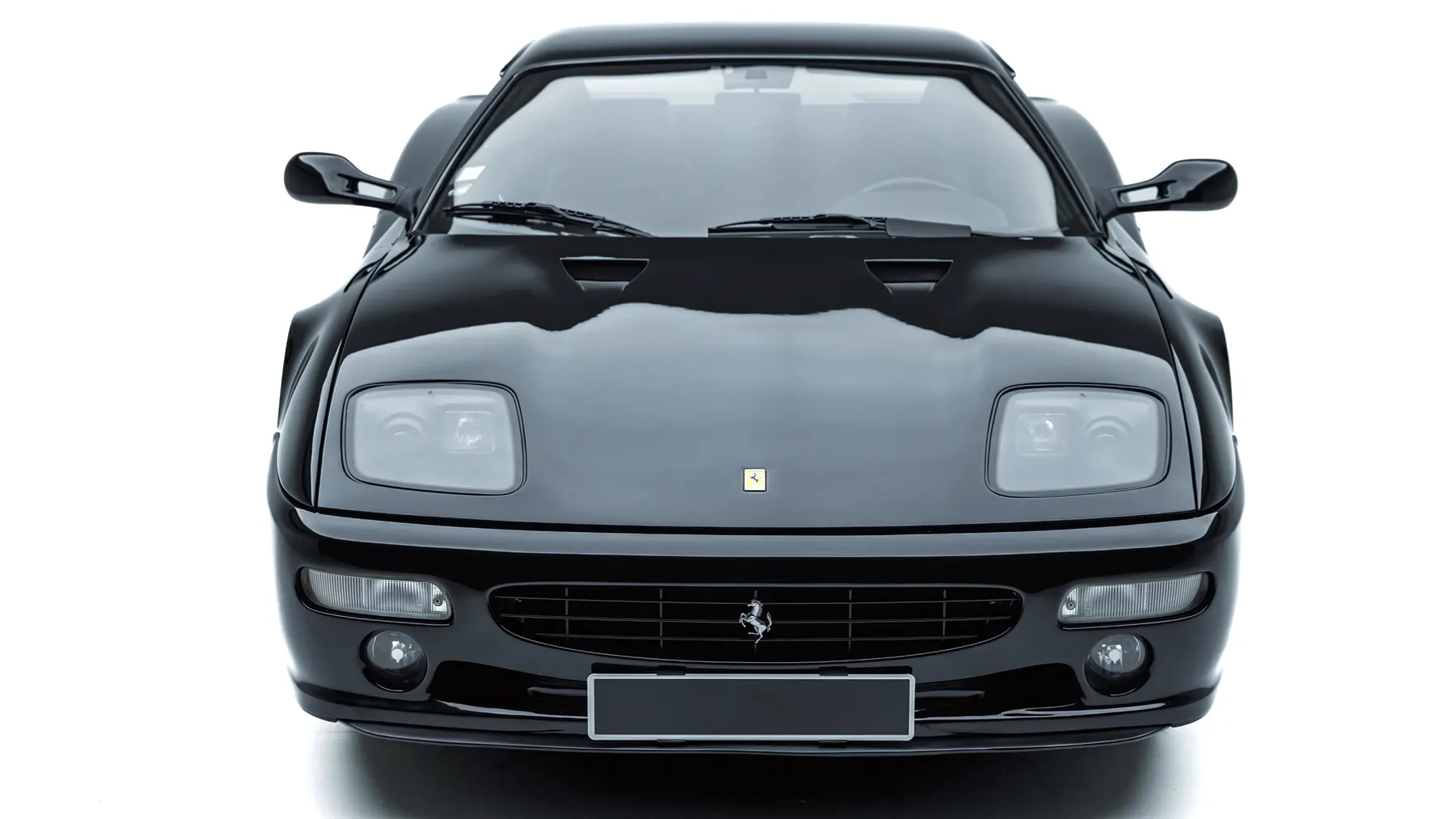
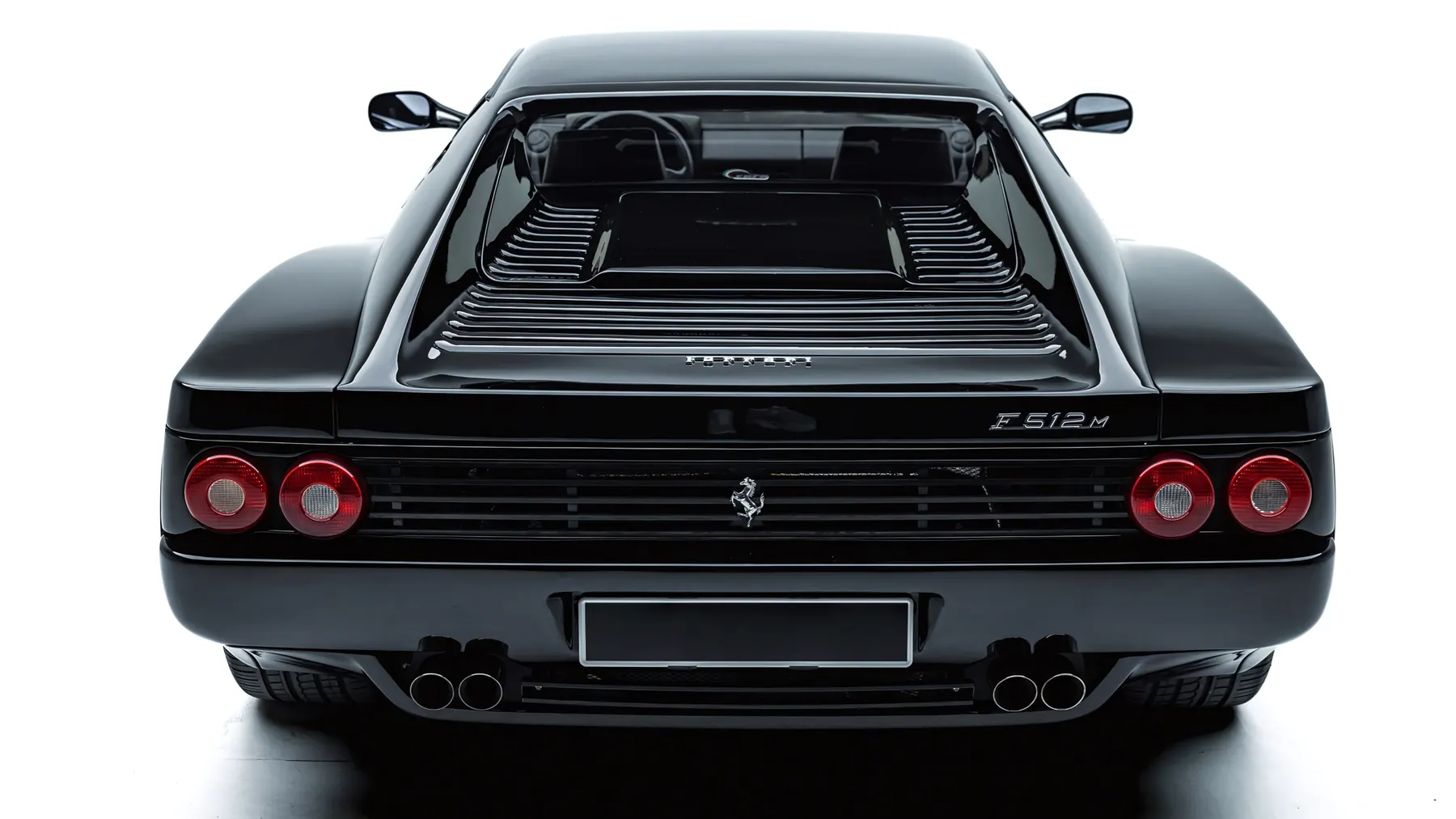
Visually, the F512 M is unmistakable next to its forebears, and that was rather the point. Pininfarina deleted the pop-up headlights that had defined the Testarossa’s face since 1984, replacing them with fixed homofocal units under glazed covers, added a pair of NACA ducts to the front lid to feed a reworked air-conditioning system, and reshaped the nose and grille to echo the F355 and 456 GT. At the rear, the full-width louvred grille shrank and gained a pair of exposed circular tail-lights in the same idiom, the raised engine cover lost its Testarossa script, and a small F512 M badge appeared in its place. Underneath the skin, none of the Testarossa’s celebrated door-mounted “cheese grater” strakes, which fed the side-mounted radiators, went anywhere; that signature remained untouched even as everything around it changed. What Ferrari always called a flat-twelve was, in the strict engineering sense, a 180-degree V12 rather than a true boxer, a point of pedantry enthusiasts still enjoy raising.
It is worth being honest about how that redesign landed at the time, because the F512 M’s reputation still carries the scars. Specialist assessment of the car has not been kind to Pininfarina’s facelift, with one detailed technical appraisal describing the result as a horrible muddle - a parts-bin assembly of F355 lights, 456 details and Mythos-style wheels grafted onto a decade-old silhouette that never quite resolved into a coherent whole. Contemporary buyers seem to have agreed: despite arriving in healthier economic conditions than the 512 TR had, and despite being the more capable car mechanically, the F512 M was comprehensively outsold by its predecessor, at a ratio of better than four to one over comparable production spans. Only 75 of the 501 cars built were sent to the United States, Ferrari’s largest market at the time, a striking allocation for what should have been the flagship mid-engined offering. None of this reflects an unsound car underneath - the chassis, brakes and engine were all genuine improvements - but the styling misstep mattered commercially in a way the underlying engineering could not fully offset. There were older compromises the facelift did nothing to fix, either. The Testarossa platform’s cabin had always been unusually wide relative to the car overall, a consequence of mounting radiators either side of the passenger compartment rather than at the nose, and at just under 1.98 metres across, the F512 M - dimensionally identical to the 512 TR - could still be a handful to thread down a narrow B-road without one car or the other giving way. American-market cars, denied airbags in favour of Ferrari’s motorised Passive Restraint seatbelt system carried over from the late-1980s Testarossa, felt dated next to newer rivals even when new, a compromise dictated by the platform’s age rather than anything specific to the F512 M’s own updates.
Inside, changes were modest, largely because the 512 TR had already received a thorough overhaul of its cabin only two years earlier. The F512 M gained a new steering wheel, an aluminium gearknob, adjustable drilled alloy pedals and reworked switchgear, sitting within full leather trim, air-conditioning, electric windows and mirrors, and a stereo hidden behind a pop-up panel - standard fare for a Ferrari at this price point rather than a meaningful step forward from the car it replaced. Options ran to Recaro sports seats with cloth centres, a full-size spare wheel and tyre, and a set of fitted Schedoni luggage. On the road, reviewers and specialists who drove the F512 M against its Testarossa-family relatives were consistent in rating it the most engaging of the three: sharper turn-in, a chassis that communicated more clearly what the front tyres were doing, and a gated manual shift made noticeably slicker by the revised synchromesh. In a class that was increasingly moving toward turbocharging and four-wheel drive - the Lamborghini Diablo VT and Porsche’s contemporary 911 Turbo both among them - the F512 M’s naturally aspirated, rear-wheel-drive character marked it out as something of a purist’s alternative, for buyers willing to trade outright versatility for the immediacy of a big, high-revving atmospheric engine. None of this changed the fundamental character of the car - a wide, naturally aspirated grand tourer rather than a knife-edged track weapon - but it did mean the final Testarossa rewarded a committed driver more than either of the cars that came before it.
A handful of F512 Ms went further still. At least six cars were sent back to Pininfarina and rebuilt to “Speciale” specification for a single private client, with new bodywork, reworked interiors and Prodrive-developed semi-automatic transmissions replacing the standard manual gearbox. All were right-hand drive, and all were built to a level of bespoke finish well beyond anything Maranello offered through its regular dealer network - a curious footnote that shows how much further the platform could still be pushed at the very end of its production life, for a customer with the means to ask for it.
Production wound down during 1996, after which the 550 Maranello took over as Ferrari’s flagship, using a front-mounted V12 in place of the layout the company had built its road-going supercars around since the early 1970s. That made the F512 M the last mid-engined, flat-twelve-powered Ferrari sold to the public, closing out a lineage that ran from the 365 GT4/BB through the Berlinetta Boxer and three distinct Testarossa generations. Its 501-car production run, against 2,280 512 TRs and 7,177 original Testarossas, makes it comfortably the rarest of the family, and time has been kinder to its reputation than 1994 showrooms were: the driving experience that specialists praised at launch is now the main reason collectors seek the car out, even as the styling remains as divisive among enthusiasts as it ever was. Values reflect that reassessment. Hagerty’s price guide has placed a good-condition example at a little over half a million dollars, and recorded sale prices for the best cars have climbed past a million - figures that would have seemed absurd to the dealers who struggled to shift F512 Ms against 512 TRs three decades earlier. It is not the version of the Testarossa most people picture when they think of Ferrari’s 1980s poster car - that honour still belongs to the pop-up-headlight original - but mechanically, it is the one that finished what that original started.
Technical data
Specifications
| Specification | Ferrari F512 M |
|---|---|
| Engine | 4.9-litre flat-twelve (180°), DOHC 4 valves/cylinder, dry sump |
| Displacement | 4,943cc (82mm x 78mm bore/stroke) |
| Compression ratio | 10.4:1 (Europe); 10.1:1 (US) |
| Fuel/ignition | Bosch Motronic M2.7 |
| Power | 440bhp @ 6,750rpm (Europe); 432bhp @ 6,750rpm (US) |
| Torque | 368lb-ft @ 5,500rpm (Europe) |
| Transmission | 5-speed manual, limited-slip differential |
| Layout | Mid-engine, rear-wheel drive |
| 0–62mph | 4.7 seconds |
| Top speed | 196mph (claimed) |
| Kerb weight | c. 1,455kg |
| Wheelbase | 2,550mm |
| Brakes | Ventilated, cross-drilled discs – 315mm front / 310mm rear, 4-piston callipers, ABS |
| Wheels | 18x8in front / 18x10.5in rear, split-rim alloy |
| Fuel tank | 110 litres |
| Production | 501 units, 1994–1996; 75 right-hand drive (41 UK); 75 to the United States |
Sources
- Ferrari.com – Official F512 M Heritage Page
- SBR Engineering – Ferrari F512 M Specifications
- Supercar Nostalgia – Ferrari F512 M Guide: A Historical & Technical Appraisal
- Classic & Sports Car – Buyer’s Guide: Ferrari Testarossa
- Classic Driver Magazine – The Ferrari F512 M: Ugly Duckling or Pick of the Litter?
- Classic Driver Magazine – Is the Ferrari F512 M the Ultimate Testarossa?
- Hagerty Valuation Tools – 1995 Ferrari F512 M
- Hagerty Valuation Tools – 1996 Ferrari F512 M
- Classic.com – Ferrari F512 M Market Data
Join the discussion
Comments
Loading comments…
Leave a comment
Share a detail, memory, or perspective. Every comment is reviewed before publication.