Maserati Mexico 4.7 by Vignale: A Name Born From a Crash
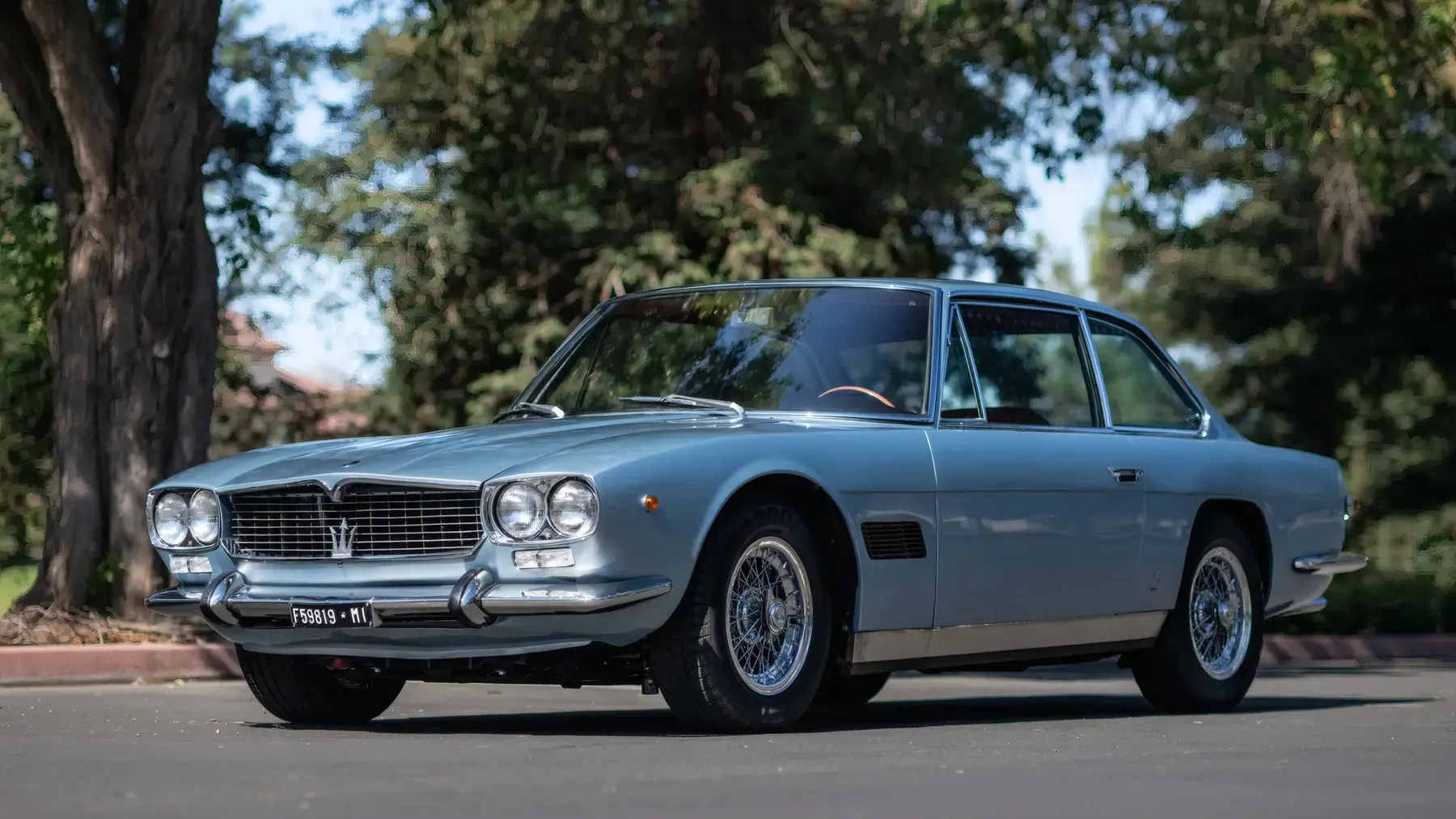
1966 Maserati Mexico 4.7 Coupe by Vignale

Images: Courtney Frisk / RM Sotheby's
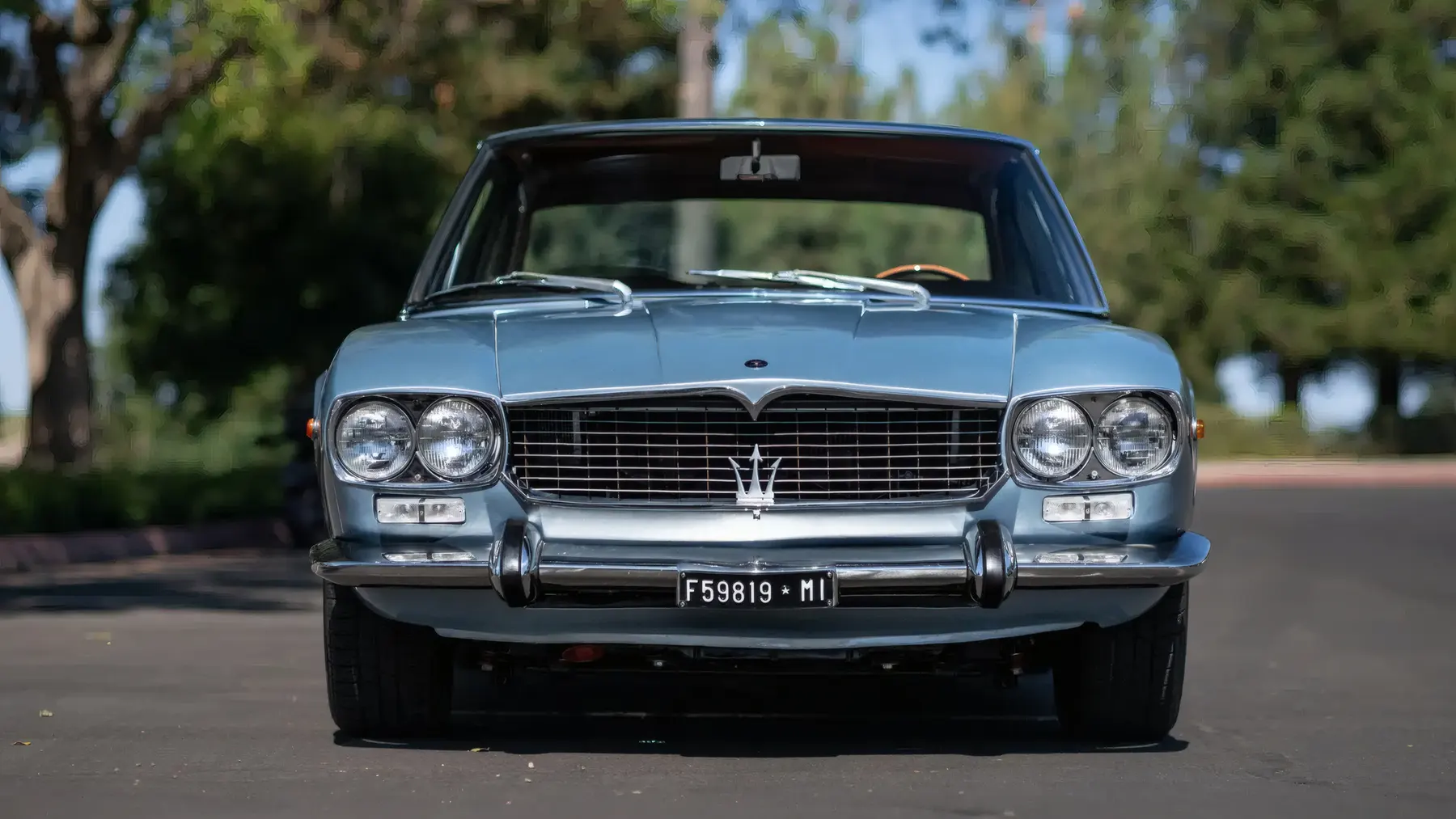
Most people who recognise the Maserati Mexico’s name assume it commemorates John Surtees’ win in a Cooper-Maserati at the 1966 Mexican Grand Prix. It doesn’t, or at least not directly - every source consulted agrees the timing was a genuine coincidence that Maserati was happy to let stand as free publicity. The real origin story, though accounts differ on some of the finer detail, is stranger and says more about how Italian coachbuilding actually worked in the mid-1960s. A Maserati 5000 GT connected to the Mexican president, Adolfo López Mateos, was wrecked on a highway between Puebla and Mexico City, and the damaged chassis found its way to Carrozzeria Vignale in Turin, which was tasked with fitting an entirely new body in time for the October 1965 Salone di Torino. Some accounts describe the crashed car as López Mateos’s own; others say Vignale simply rebodied a wrecked 5000 GT chassis and sold the finished prototype to the president only after its Turin debut. Either way, the resulting two-door, four-seat coupé made such an impression on Vignale’s stand that Maserati resolved almost immediately to put a production version into series manufacture, and López Mateos’s ownership of the prototype fixed the car’s name before a single production example existed.
That improvised beginning says a good deal about what the Mexico was actually for. It was never conceived as a flagship or a technical showcase; it was Maserati’s answer to a gap that had opened in its own range. The 5000 GT it effectively replaced had been a desperately expensive, semi-bespoke exercise - only around three dozen were built between 1959 and 1966, at prices roughly double the six-cylinder 3500 GT - and Maserati needed a four-seat V8 grand tourer it could sell in genuinely useful numbers. The production Mexico, Tipo AM112 in factory paperwork, achieved that by borrowing rather than inventing. Its steel monocoque was a shortened version of the first-generation Quattroporte’s, the wheelbase trimmed by around 11cm to 2,640mm, and its engine, gearbox and much of its running gear were drawn wholesale from elsewhere in the Maserati family. The car appeared in production form at Rimini’s Concorso internazionale di eleganza in August 1966, then crossed to Paris for its international debut that October.
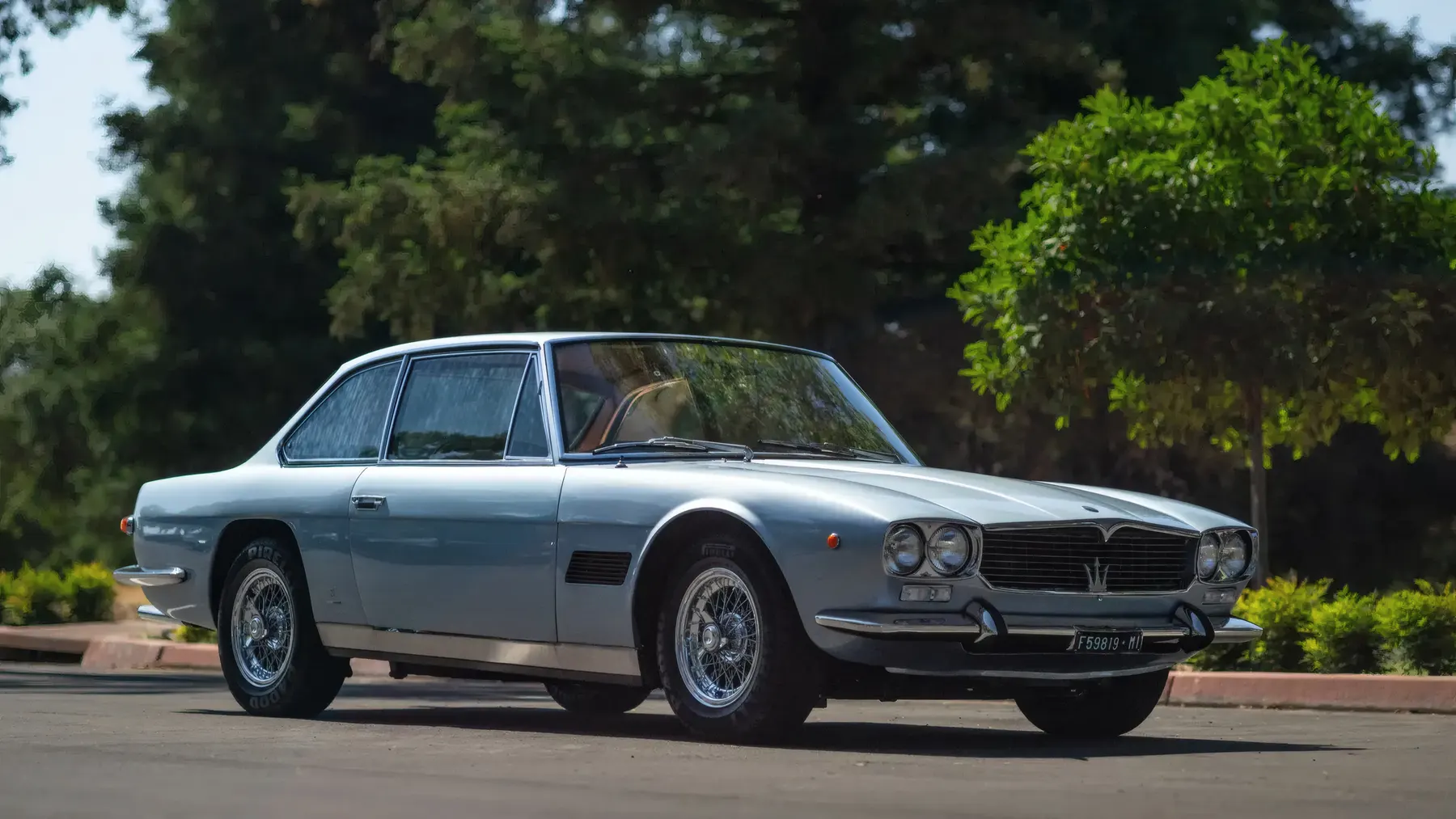
Under the bonnet sat Maserati’s familiar 90-degree, twin-cam V8, offered at launch only in 4.7-litre form - sources vary between 4,709cc and 4,719cc - good for 290bhp at 5,000rpm, fed by four twin-choke Weber 38 DCNL5 carburettors on an 8.5:1 compression ratio. It was closely related to the unit already doing service in the 5000 GT and the original Quattroporte: wet-sumped, mechanically straightforward, and built for durability rather than outright exoticism. Maserati claimed a top speed in the region of 150 to 155mph, a genuinely rapid figure for a full four-seater in 1966. Drive went through a five-speed ZF manual gearbox with overdrive as standard, with a three-speed Borg-Warner automatic offered for buyers who wanted the Mexico’s other qualities - standard air conditioning, electric windows, a wood-rimmed dashboard, and options including power steering and a radio - without a clutch pedal to manage. The Mexico also carries a genuine, if modest, technical footnote: it was the first production Maserati fitted with servo-assisted, ventilated disc brakes on all four corners, a meaningful upgrade for a car capable of these speeds.
In 1969, breaking with Maserati’s usual habit of offering only its largest available engine, the factory introduced a smaller 4.2-litre (4,136cc) version of the same V8, commonly cited at around 260bhp, aimed at buyers who wanted the Mexico’s space and presence without the fuel consumption and import duties that came with a full 4.7 litres of Italian V8. The two engines were visually distinguishable at a glance: 4.7-litre cars rode on 15-inch Borrani chrome wire wheels, while 4.2-litre cars made do with plainer steel disc wheels, a small but telling piece of factory cost engineering. Across its production run - generally given as 1966 to 1972, though some sources extend it to 1973 - the Mexico found somewhere between 480 and 485 buyers in total, split roughly 175 to the 4.7-litre car and around 305 to the smaller-engined version. One further, entirely separate example complicates the story: in the mid-1960s Maserati built a single Mexico-style coupé to the special order of the German concessionaire Auto Koenig, bodied not by Vignale but by Pietro Frua, and powered not by a V8 at all but by the 3.7-litre fuel-injected straight-six from the Mistral - a reminder that, even inside a nominally standardised production model, Maserati of this era would still build almost anything a paying customer asked for.
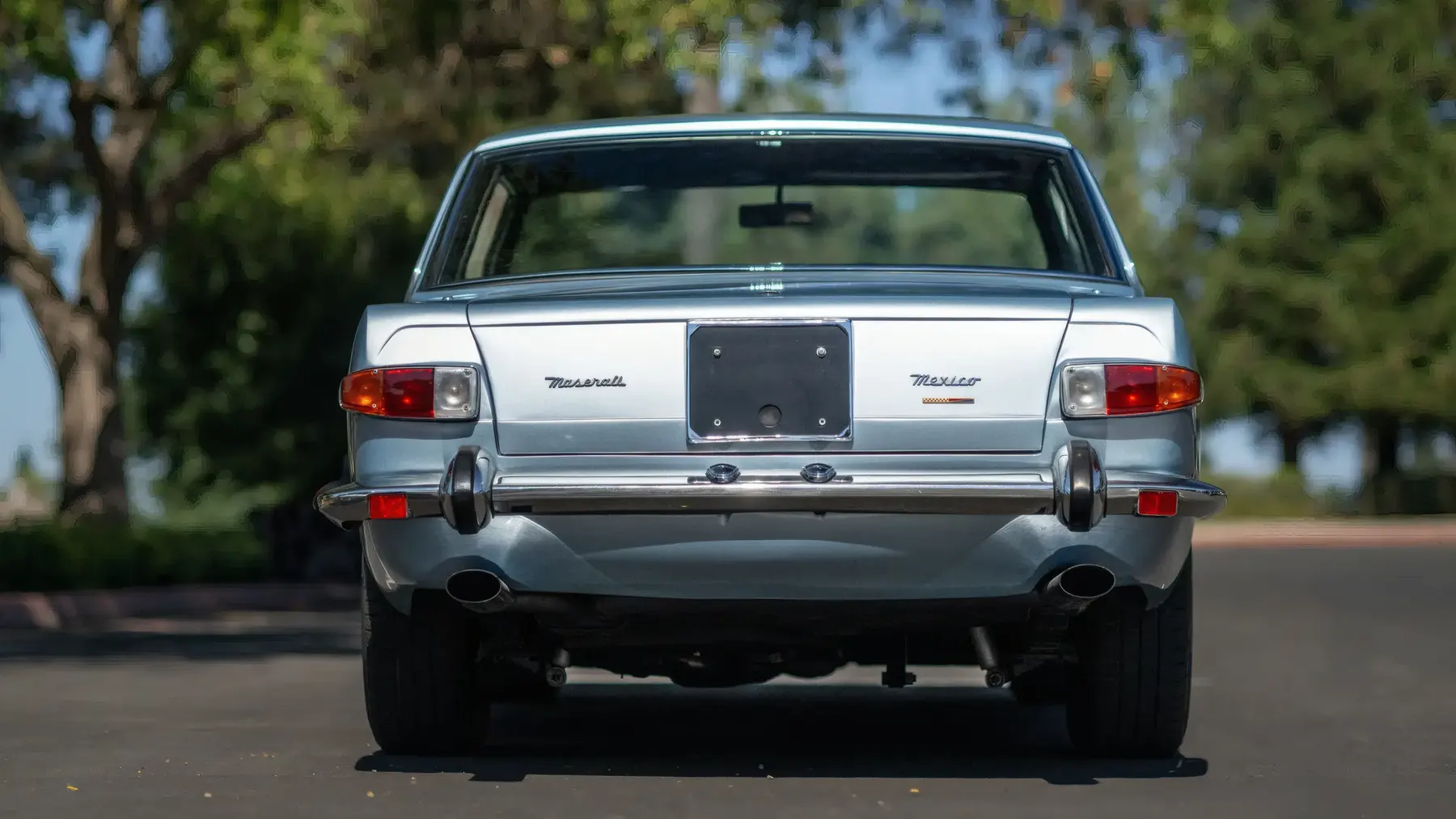
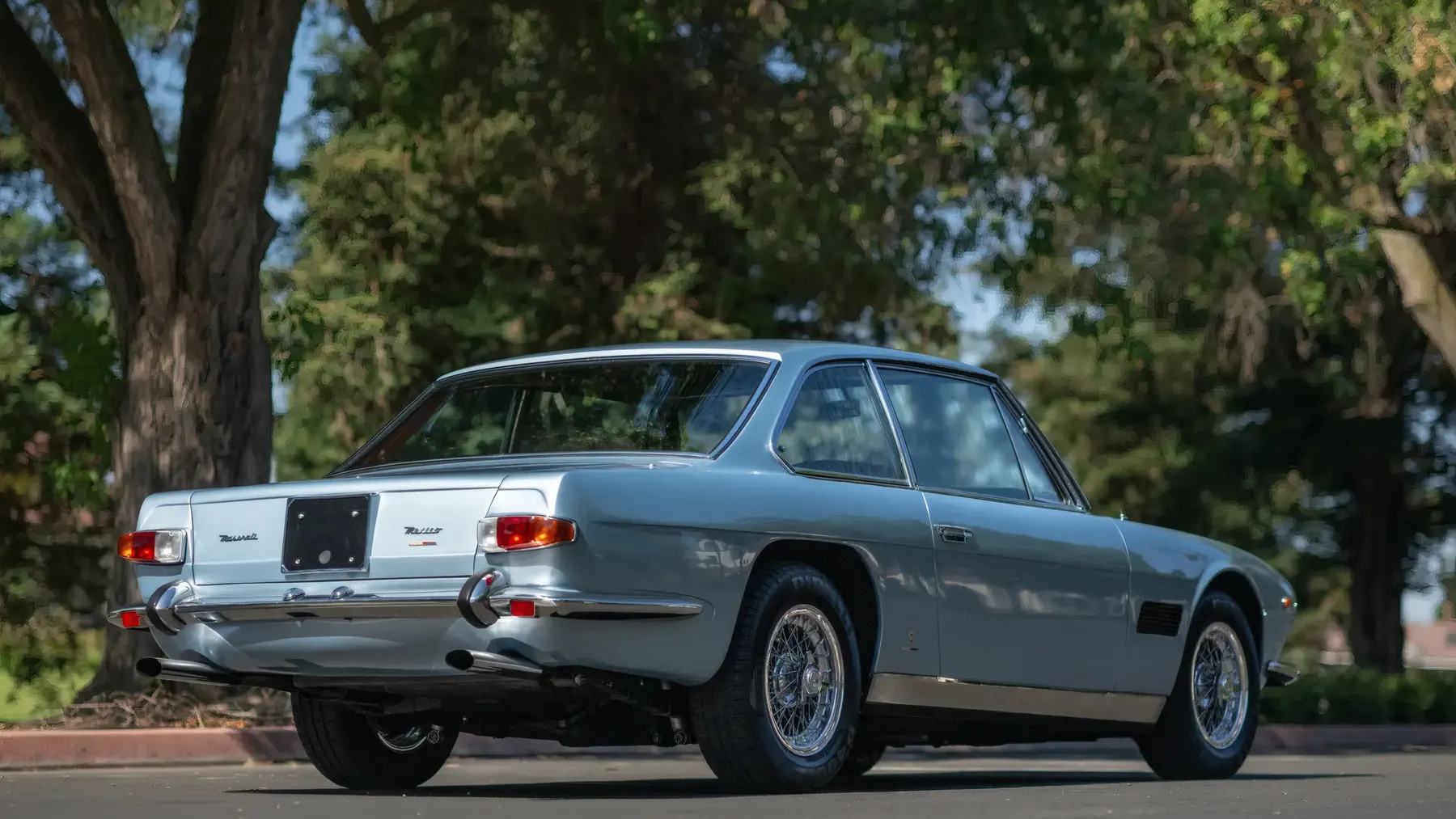
Underneath the elegant Vignale bodywork, the Mexico’s chassis engineering was considerably less adventurous than its price tag suggested. The front suspension used conventional independent double wishbones and coil springs, which was perfectly respectable for the class. The rear, though, relied on a live Salisbury axle located by semi-elliptic leaf springs - technology that predated the car by decades, and one which some contemporary mid-market saloons were already beginning to move away from. One specialist publication has observed that Maserati through the 1960s and into the early 1970s tended to lean on its competition pedigree rather than reinvest heavily in new mechanical engineering, favouring proven, shared components - including live rear axles - over the independent suspension layouts some rivals were beginning to adopt, and the Mexico is a straightforward example of that approach in metal. The practical consequence was a car that rode acceptably and cruised with real authority in a straight line, but which could not match the composure of more modern-thinking rivals when pushed hard through a series of corners, and which was liable to the axle tramp and comparatively unsophisticated body control that a solid rear axle brings to a heavy, powerful grand tourer. Weight compounded the issue: sources disagree sharply on the exact figure, with dry weight quoted anywhere from around 1,450kg to as much as 1,830kg depending on which specification sheet is consulted, but even toward the lower end this was a substantial car for a two-door coupé, and it blunted what should have been searing performance from a 290bhp V8 into something merely brisk by the standards of its lighter, more focused rivals.
Behind the wheel, the compromises and the appeal come from the same source. The big V8’s flexibility meant the Mexico never needed working hard to make rapid progress; it simply gathered speed with little drama, the ZF gearbox’s overdriven top gear built for effortless motorway cruising rather than back-road heroics, and the standard air conditioning and hushed cabin reinforcing the sense of a car built for covering ground rather than attacking a hillclimb. Steering, even with the optional power assistance, demanded a measure of effort at low speed that a modern driver would find old-fashioned, and the driving position and relatively slim glasshouse pillars gave decent, if unremarkable, visibility for a coupé of this size. It was, in short, a car that rewarded a relaxed, long-legged driving style far more than an aggressive one, and owners who tried to drive it like a two-seat sports car were always going to be disappointed by that solid rear axle.
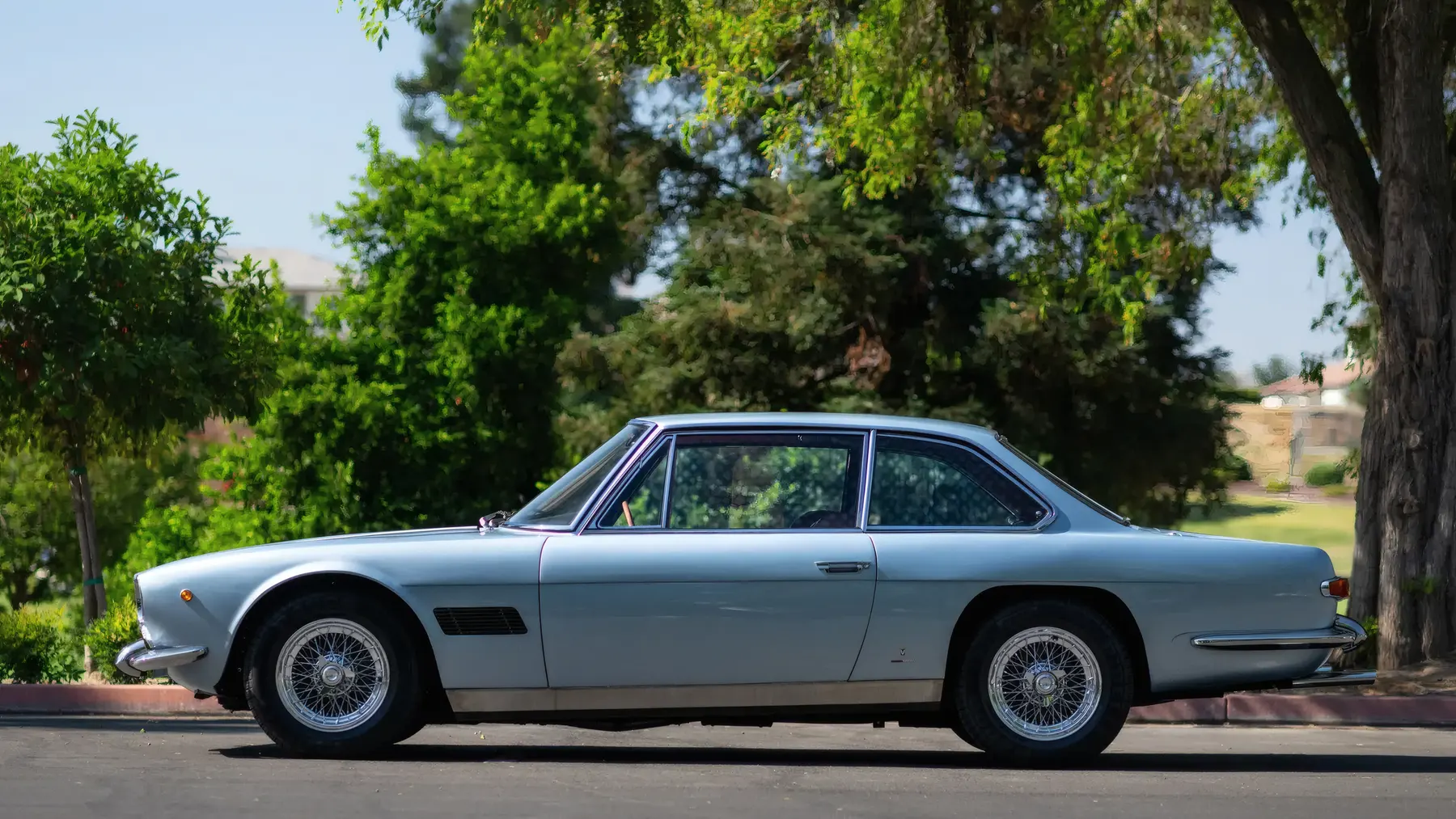
The styling made its own kind of compromise. Vignale’s design for the Mexico - credited in some sources, including Wikipedia and RM Sotheby’s own catalogue notes, to the coachbuilder’s in-house stylist Virginio Vairo, and in others, including several specialist Maserati registries, to the freelance designer Giovanni Michelotti - gave the car a dignified, upright, formal three-box silhouette, with twin headlights recessed into chrome fender surrounds and Quattroporte-derived tail lights. It read as exactly what it was: a well-proportioned, conservatively handsome four-seat coupé rather than a sports car in a business suit. That restraint became a real liability within weeks of the Mexico’s Paris debut, when Ghia unveiled Giorgetto Giugiaro’s startling Ghibli at the Turin show that November. Classic & Sports Car has suggested the Ghibli’s dramatic, low-slung shape was conceived partly to inject fresh excitement into a Maserati line-up that was starting to feel dated by comparison - and the Mexico, despite being the newer of the two designs by mere weeks, was unmistakably part of the range being reinvigorated rather than the car doing the reinvigorating. Buyers agreed with their wallets: the Ghibli coupé alone found more than 1,200 customers, well over double the Mexico’s entire production run, and it has remained the more celebrated and more valuable of the two ever since. The Mexico, meanwhile, settled into the role it perhaps always suited best - a comfortable, relatively unglamorous long-distance tool for four adults, overshadowed within its own maker’s showroom almost as soon as it arrived.
None of that made the Mexico a poor car to actually own and drive. Contemporary Italian trade coverage praised it as a genuinely useful and versatile addition to Maserati’s line-up, noting its space, its manageability, and its factory air conditioning system, shared with the flagship Quattroporte, at a time when that was still a rare and valued fitment on a European grand tourer. The cabin, trimmed in leather for four adults with a proper wooden dashboard, offered room and comfort that the low, rakish Ghibli, with its far tighter rear accommodation, simply couldn’t match - which made the Mexico a genuinely different proposition rather than an inferior one, aimed at owners who wanted to use all four seats on a long run rather than merely look fast standing still outside a hotel. Against contemporaries such as the Ferrari 330 GT 2+2 or the Jensen Interceptor, the Mexico’s pitch was similarly pragmatic: fewer cylinders than the Ferrari, less outright drama than the Ghibli, but a genuinely usable four-seat cabin, servo-assisted disc brakes on all four wheels, and a price that undercut Maserati’s own outgoing flagship substantially.
Maserati never built a direct successor. When the marque, under Alejandro de Tomaso’s post-Citroën ownership, needed another close-coupled four-seat GT for 1976, it reached not for a clean-sheet Mexico replacement but for the existing De Tomaso Longchamp platform, restyled by Pietro Frua into the Kyalami - a car Classic & Sports Car has judged closer in spirit to the three-box Mexico than to the Indy that had carried Maserati’s four-seat V8 GT torch in the interim, but one built on borrowed underpinnings out of financial necessity rather than developed engineering lineage. In that sense, the Mexico’s basic idea - a practical, four-seat, V8-powered Maserati grand tourer built to be driven rather than admired from across a showroom floor - outlived the car itself, even if the realities of a repeatedly sold and financially troubled manufacturer meant no true engineering descendant ever appeared. Collector interest has followed a similar pattern to period sales: the Mexico has generally traded, and continues to trade, well behind its Ghibli and Mistral siblings in the classic-car market, a function of its lower public profile rather than any deficiency in what it actually offers as a usable, comparatively affordable route into four-seat, V8-engined 1960s Maserati ownership.
Today the Mexico sits, largely through circumstance rather than any real shortfall in ability, in the shadow of glossier siblings from the same extraordinary stretch of Maserati history: a comfortable, honestly engineered, slightly old-fashioned Modenese express that did precisely what it was built to do, for exactly the buyers who wanted it.
Sources
- Maserati Mexico - Wikipedia
- RM Sotheby’s - 1967 Maserati Mexico 4.7 Coupé by Vignale (The Guikas Collection)
- Conceptcarz - 1967 Maserati Mexico
- Enrico’s Maserati Pages - The Maserati Mexico
- Autoevolution - The Maserati Mexico: Underrated Yet Mesmerizing
- Classic & Sports Car - Cruise missiles: the Maserati Ghibli
- Classic & Sports Car - Maserati Kyalami vs De Tomaso Longchamp: the same, but different
- Maserati - The Maserati Ghibli: A powerful car named for a powerful wind celebrates 55 years
- Maserati Kyalami - Wikipedia
Join the discussion
Comments
Loading comments…
Leave a comment
Share a detail, memory, or perspective. Every comment is reviewed before publication.