Porsche 911 (930) Turbo: Born From a Rulebook, Feared as the Widowmaker
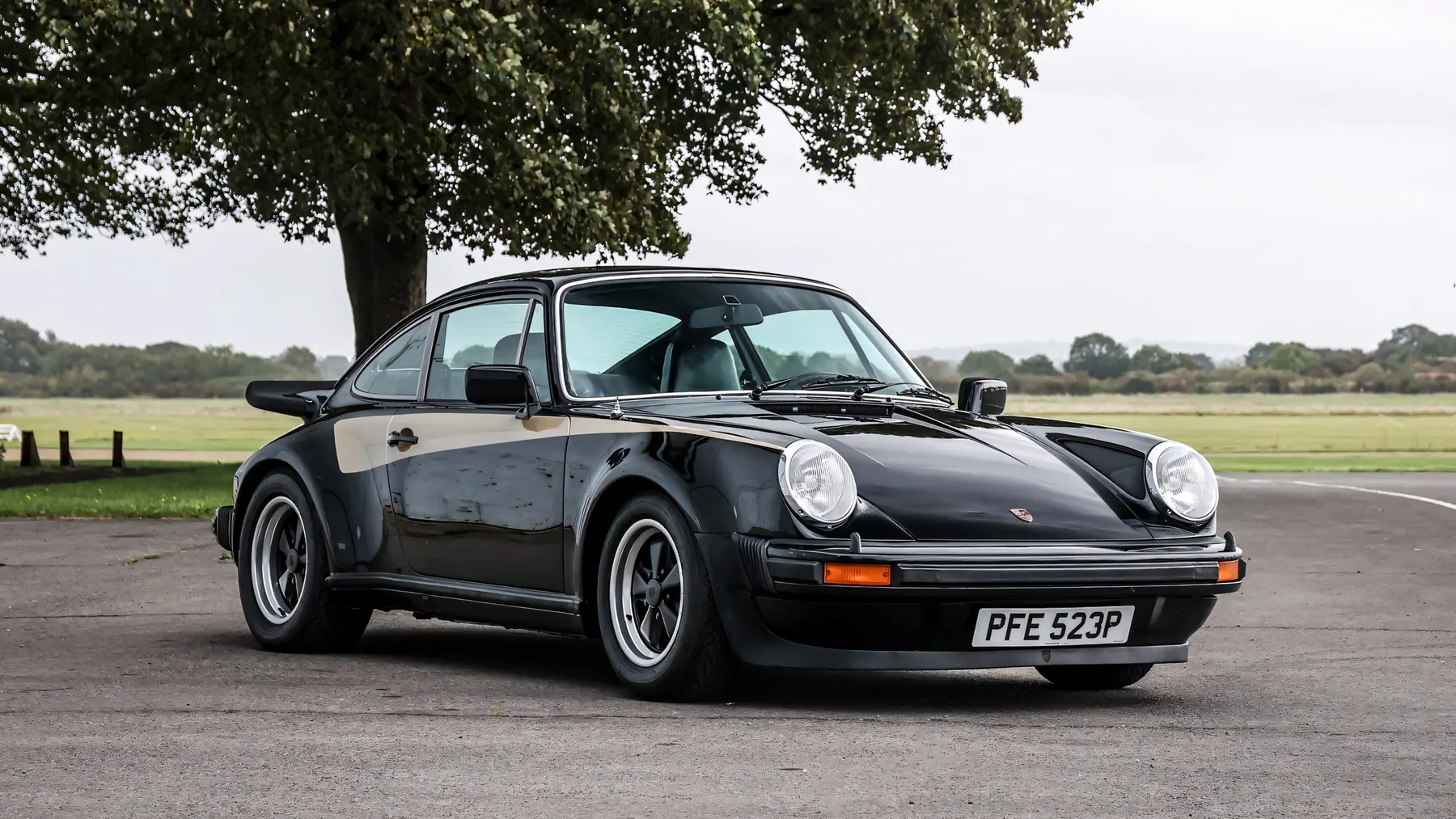
1976 Porsche 911 Turbo Coupé
%20Turbo%3A%20Born%20From%20a%20Rulebook%2C%20Feared%20as%20the%20Widowmaker%20%7C%20Motor%20Archive)
Images: Peter Seabrook / RM Sotheby's
Homologation paperwork does not usually make for gripping reading, but a rule change buried in FIA’s Appendix J regulations for Group 4 and Group 5 racing in the mid-1970s did something remarkable: it obliged Porsche to put a genuine race-bred, turbocharged 911 on public sale, and in doing so created one of the most feared and admired road cars of the decade. What began largely as a defensive engineering exercise, designed to keep Porsche’s competition department supplied with a homologation base, escalated into the Porsche 911 Turbo, internally designated Type 930, a car whose blend of explosive, unpredictable power and everyday 911 usability made it both a sensation on arrival and, in time, a cautionary tale repeated by generations of owners.
Porsche’s turbocharging expertise did not appear from nowhere. Company president Ernst Fuhrmann had overseen the twin-turbo flat-twelve that powered the outrageous 917/30 Can-Am racer, an engine that during 1972 and 1973 produced comfortably in excess of 1,000 bhp, and Porsche had also campaigned an experimental turbocharged Carrera RSR of around two litres’ capacity in 1974. Fuhrmann’s engineers applied that forced-induction knowledge to the 2,994cc flat-six from the Carrera RS 3.0, fitting a single KKK turbocharger and Bosch K-Jetronic fuel injection, and dropping the compression ratio to 6.5:1 to keep boost-induced cylinder pressures under control. A prototype, badged simply with ‘Turbo’ lettering on its rear wing and still wearing many Carrera RS 3.0 fittings, appeared at the Frankfurt motor show in the autumn of 1973 to test public appetite; the production-ready car received its formal unveiling roughly a year later, with Porsche’s own account placing this at the Paris motor show in October 1974, though at least one specialist source instead cites Frankfurt for that later date. Production began in February 1975, European deliveries followed that spring, and the first cars reached American showrooms in 1976, initially wearing “Turbo Carrera” badging before Porsche settled on the simpler “Turbo” name it has used ever since.
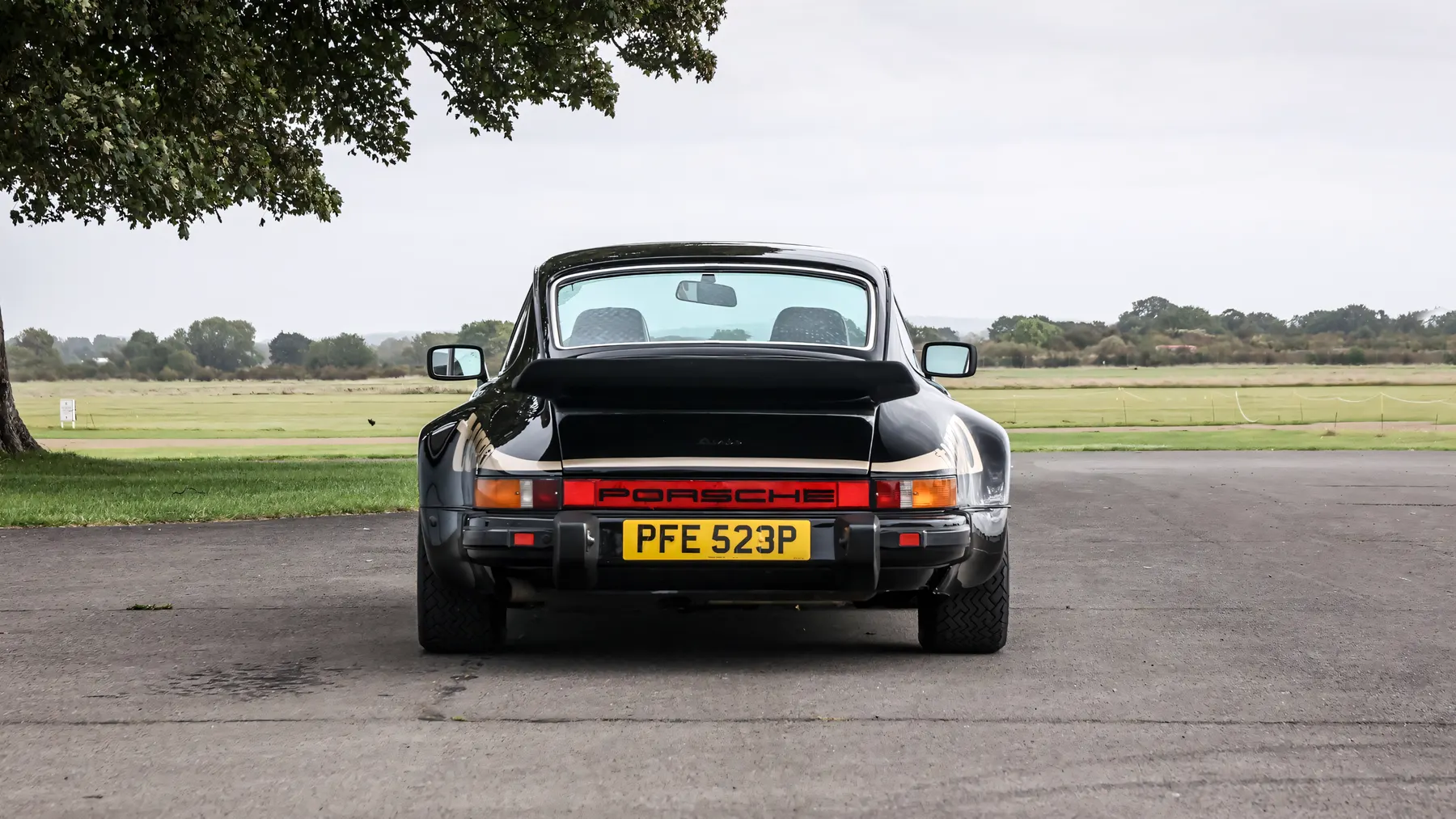
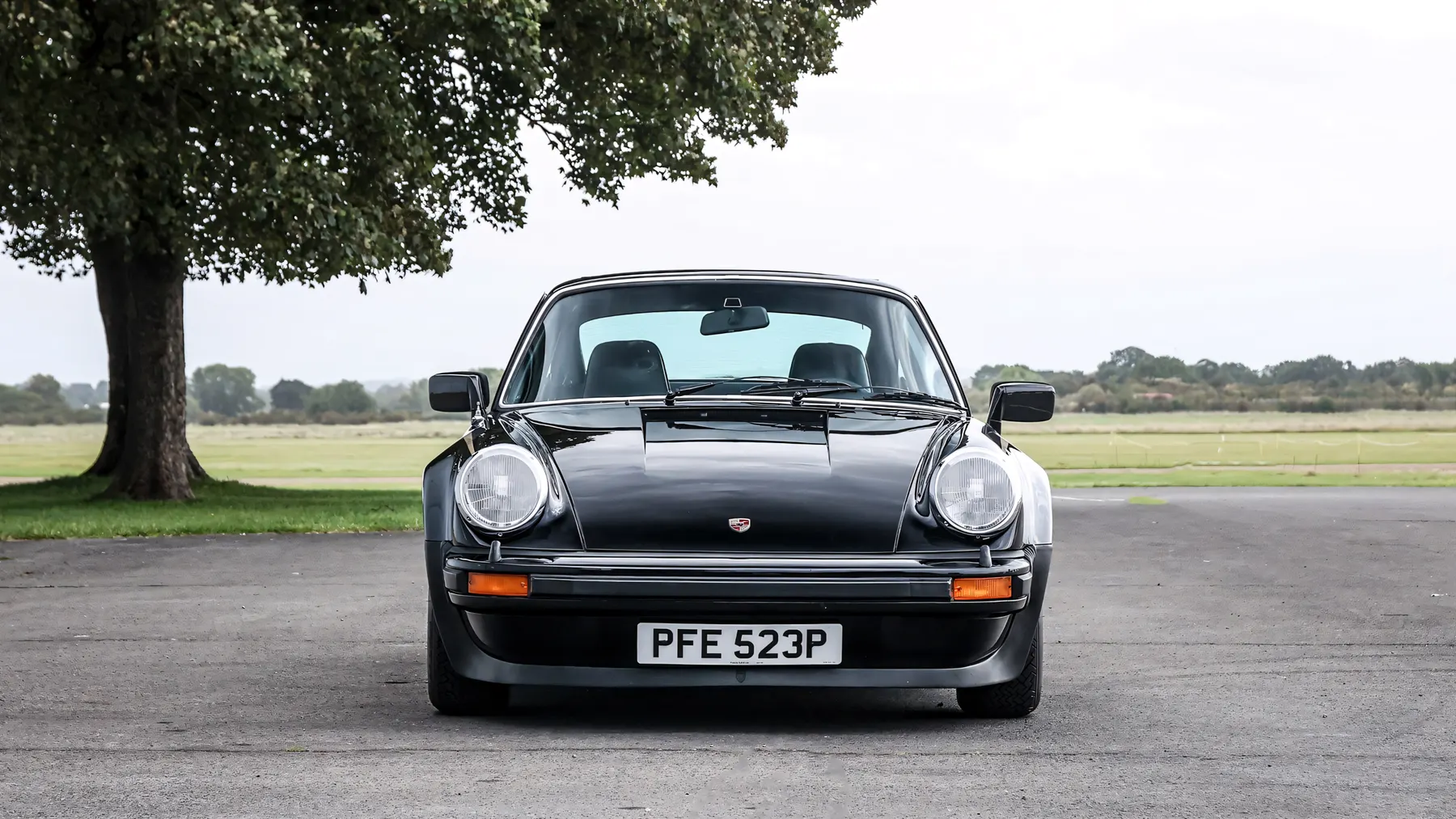
The engine that resulted made a claimed 256 bhp at 5,500rpm and somewhere in the region of 243 to 253 lb-ft of torque at 4,000rpm, sources differ slightly on the precise torque figure, enough to propel a car weighing around 1,195kg to 62mph in roughly five and a half seconds and on to a top speed of about 155mph, reportedly making it the fastest production car built in Germany at the time. Those numbers alone would have made the 930 startling in period, but the flat-six also featured a boost-pressure-controlled turbocharger, a genuine novelty for a road car, initially running at 0.8 bar before Porsche raised it to a fuller 1.0 bar the following model year for a more progressive delivery. To cope with the extra load, Porsche fitted a new alloy-cased four-speed gearbox, the Type 930/30, rather than trust the existing five-speed 915 transmission then used in lesser 911s, reasoning that the Turbo’s torque made a fifth ratio unnecessary. It was a decision owners argued with for the best part of a decade, since even the far less powerful Carrera came with five forward gears while the flagship Turbo made do with four. Visually, the 930 announced itself with wheel arches flared by around 6cm to cover wider Fuchs alloys (15x7-inch front, 15x8-inch rear on early cars), a deep chin spoiler to manage front-end lift, and, most famously, a fixed rear ‘whale tail’ spoiler that fed cooling air to the engine and generated genuine downforce. Underneath, Porsche carried over much of the contemporary Carrera RS 3.0’s suspension, MacPherson struts with lower wishbones, longitudinal torsion bars and anti-dive geometry at the front, semi-trailing arms with anti-squat at the rear, all damped by Bilstein shocks. At the prototype stage, Porsche had even fitted cross-drilled, ventilated brakes lifted directly from the 917 racer, but for production it reverted to a more modest, contemporary 911 braking set-up in the interests of long-term durability, a compromise that left the earliest, 15-inch-wheeled cars distinctly under-braked relative to what their engine could now do.
It is the driving experience, though, for which the 930 became notorious. Below around 4,000rpm the flat-six is almost docile, asking for a firm clutch and a spindly, long-throw gear lever but otherwise behaving much like any contemporary 911. Past that point, everything changes: boost builds explosively, the exhaust note hardens, and the car surges forward with a violence few period rivals, still reeling from the fuel crisis and tightening emissions rules, could get near. The trouble was what happened if that surge arrived somewhere a driver did not expect it, mid-corner, say, with the throttle already open. Because the 930’s turbocharger came on boost suddenly rather than progressively, and because its rear-engined layout concentrated mass behind the rear axle, a mistimed application of power could see the tail step out with little warning, and a lifted throttle mid-slide could make things dramatically worse rather than better. Enough drivers were caught out, several fatally, that the car earned the nickname “the Widowmaker,” a reputation serious enough that Porsche still requires its own staff to complete dedicated Turbo training before driving current 911 Turbo models for work purposes, despite the fact that modern cars bear little dynamic resemblance to the 1970s original.
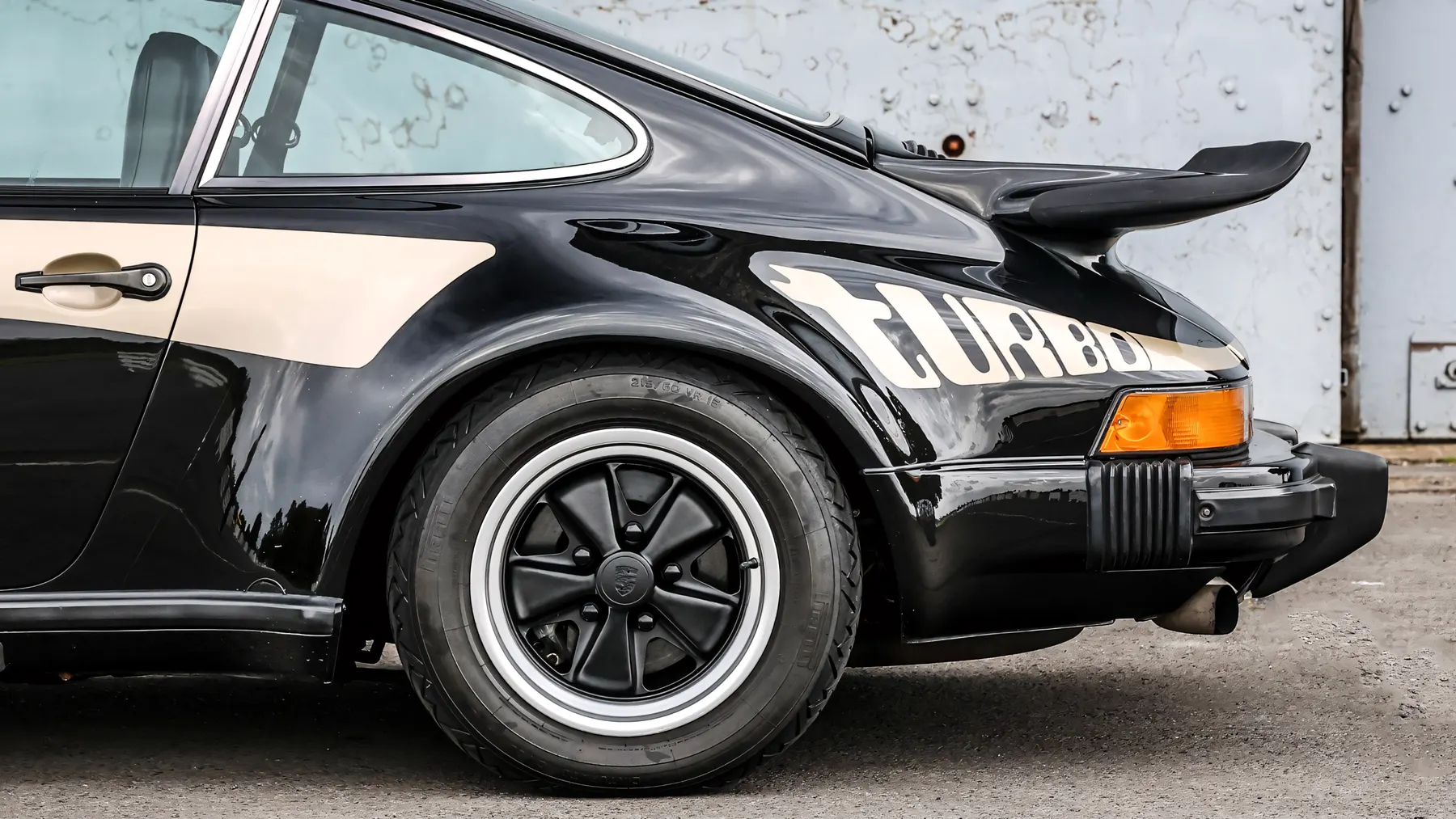
Porsche’s first significant revision arrived for the 1978 model year, when the engine grew to 3,299cc, bore increasing from 95mm to 97mm and stroke from 70.4mm to 74.4mm, and gained an air-to-air intercooler mounted beneath a taller, reprofiled ‘tea-tray’ spoiler. European-market cars now made around 296 bhp at 5,500rpm, commonly rounded to 300 bhp in period literature, and roughly 304 lb-ft at 4,000rpm, enough for a 161mph top speed and a 0-62mph time of about 5.4 seconds, figures that made the 930 3.3 the most powerful series-production Porsche of its day. Larger brakes accompanied the bigger engine, front disc diameter growing from 282.5mm to 304mm and rear from 290mm to 309mm, with aluminium hubs and finned four-piston calipers borrowed from 917 practice, addressing one of the earlier car’s genuine shortcomings. The four-speed gearbox, though, soldiered on unchanged, and the fundamental chassis architecture, tuned rather than reinvented, meant the 930’s tail-heavy, boost-reactive character carried through essentially unaltered for the rest of its production life.
Nowhere was the tension between performance and regulation more visible than in North America. US-market 930s were persistently detuned relative to their European siblings: 1970s cars fitted with thermal reactors, and in California additional vacuum controls, sacrificed meaningful power for emissions compliance, with period sources placing US-spec output for both the 3.0 and 3.3-litre cars anywhere from the low 230s to the mid-260s bhp depending on year and market, some way off the European car’s output. Tightening rules eventually proved too much: after the 1979 model year, Porsche withdrew the Turbo from the United States and Japan altogether, a decision compounded by Fuhrmann’s belief that the front-engined 928 would eventually supplant the 911 as Porsche’s flagship, leaving the Turbo starved of further investment. For six model years the car remained available only in Europe and Canada, feeding a grey-market industry of dealers who imported and federalised cars privately at a premium. It took the arrival of American-born Peter Schutz as Porsche’s president, and the development of a catalytic-converter-equipped, Bosch LE-Jetronic-injected engine rated at around 282 bhp, to bring the Turbo back to US showrooms for the 1986 model year, by which point the car had also briefly ceded its status as Porsche’s fastest, most technologically advanced production model to the twin-turbo, four-wheel-drive 959, launched that same year.
The 930’s final decade produced its most flamboyant derivatives. From 1983, Porsche offered a build-to-order Werksleistungssteigerung, or WLS, performance package that lifted output to around 325 bhp at 5,750rpm and 319 lb-ft at 4,000rpm via a freer-breathing four-pipe exhaust and an additional oil cooler. More visually dramatic still was the factory “Flachbau,” or slantnose, made available in various special-order forms from the early 1980s and formalised later in the decade as the M505/M506 Turbo S and Turbo SE options: inspired by a one-off 935-look road car Porsche built in 1982 for TAG Heuer co-owner Mansour Ojjeh, the Flachbau swapped the familiar 911 nose and “bug-eye” headlamps for sloping, 935-style bodywork with pop-up units borrowed from the 944, and offered around 330 bhp. Body-style choice finally widened in 1987, when Targa and Cabriolet versions joined the original coupé, and the long-criticised transmission was finally addressed for the 1989 model year, when the sturdier Getrag G50 five-speed, already fitted to Carrera models since 1987, was extended to the Turbo for what proved to be its final and most desirable model year, some 2,524 cars, before the 930 was retired and a turbocharged version of the new 964-generation 911 took over in 1991. Even the 930’s engineering relevance continued beyond its own production run: Porsche used one as a development mule for the TAG-badged, Porsche-built turbo V6 that powered McLaren’s Formula 1 cars to consecutive World Championships in the mid-1980s, fitting it with a taller spoiler to house F1-sized intercoolers, RUF wheels and a 10,000rpm tachometer in place of its usual dials.
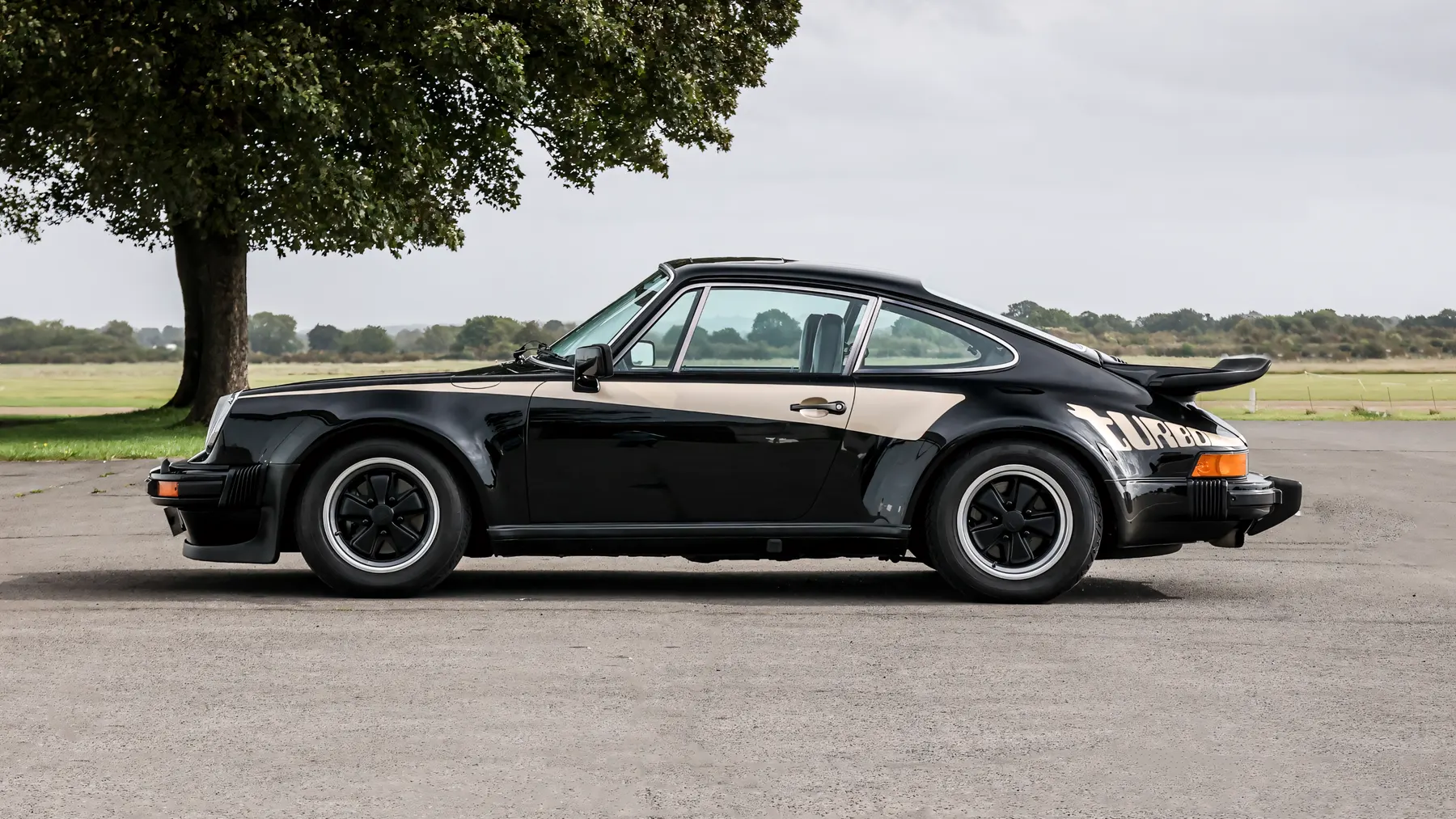
None of this obscures the 930’s original purpose. Its production run supplied the homologation base for two of the most successful customer racing cars Porsche ever built: the Group 4 934 and the Group 5 935, the latter of which dominated international sports car and GT racing for the best part of a decade. The 400 cars required for Group 4 homologation had already been built by the end of 1975, with approval granted that December, and without the roadgoing 930 meeting its production quota, neither the 934 nor the 935 could have been homologated in the first place, which makes the 930 considerably more consequential to Porsche’s competition history than its reputation as a boulevard status symbol sometimes suggests.
For all its significance, the 930 is not a car without real, well-documented flaws, and it would be dishonest to wave them away as charm. The turbo lag that defined its character also made it a genuinely dangerous car in unskilled hands: the abrupt, non-linear way boost arrived, combined with a chassis that already demanded respect from any rear-engined 911’s tendency toward lift-off oversteer, produced a car that punished hesitation and over-correction alike, and its Widowmaker reputation was earned through real accidents rather than urban myth. The four-speed gearbox, retained until literally the last model year of production, was a persistent and legitimate complaint: buyers paying flagship prices for well over a decade had to make do with fewer ratios than Porsche fitted to considerably cheaper Carreras, and only received a proper five-speed as the model was being phased out entirely. Running one today brings its own set of concerns beyond outright driving character. The Bosch fuel-injection system operates at higher pressure than most contemporary components are designed for, and fuel lines not specified for modern ethanol-blended petrol are prone to leaks, while the manifold connecting turbocharger to heat exchanger can crack under sustained thermal stress, and the system’s sensitivity to contamination means long storage periods do it no favours. Fuel economy, unsurprisingly, is poor by any standard, drivers can expect around 15mpg if the car is used as its turbo demands, and even the improved 3.3-litre brakes feel modest against modern reference points, however capable they were for their era. Nor was the Turbo immune to being overtaken by its own manufacturer: the arrival of the 959 in 1986 relegated it to second-fastest Porsche almost overnight, a reminder that for all its drama, the 930’s underlying architecture, a steel unibody, air-cooled rear-mounted six and torsion-bar suspension tuned rather than redesigned, was already well over a decade old by the time production finally ended.
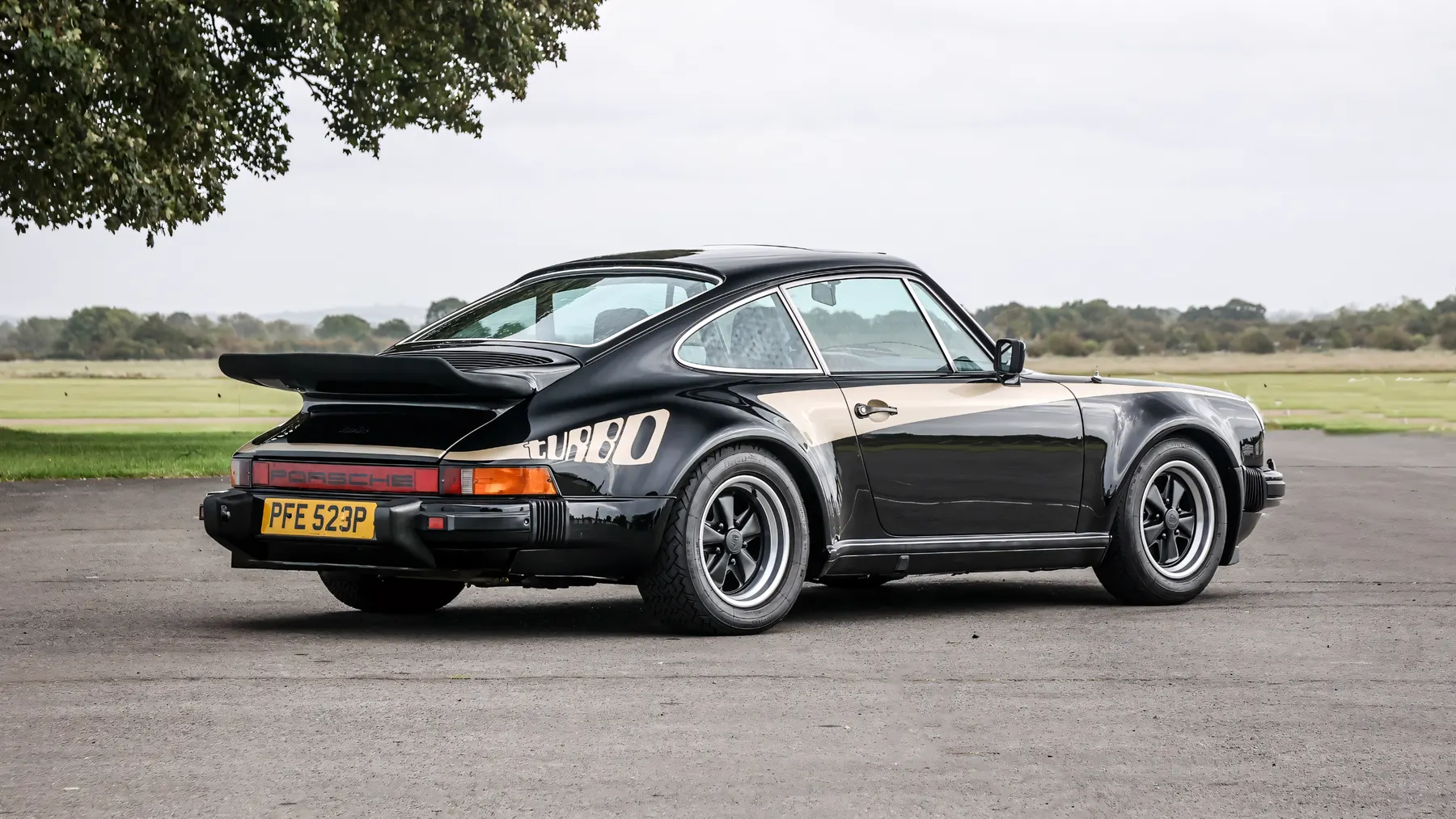
None of which has dented the 930’s standing among collectors and enthusiasts, who tend to value it precisely because it demanded so much of its driver and offered no electronic safety net in return. Values today reflect that appetite: the rarer, more unruly 3.0-litre cars from 1975 to 1977 typically command well into six figures in good condition, and cleanly documented, low-mileage examples of any year can climb considerably higher, particularly for special-order Flachbau or WLS-equipped cars, though the market has cooled somewhat from its mid-2010s peak. What the 930 leaves behind is not simply a badge, still worn by 911 Turbos to this day, but a template: a compact, rear-engined sports car whose everyday manners, air conditioning and leather included, concealed something considerably more feral just past four thousand revs. Every subsequent 911 Turbo, from the friendlier four-wheel-drive 964 and 993 generations through today’s biturbo 992, exists in some sense as an answer to the question the 930 posed first, how much performance a road car can civilise before it stops being interesting to drive at all, and depending on who you ask, Porsche has spent the decades since either solving that problem or slowly trading away the very rawness that made the original so compelling.
Sources
- Porsche AG: “50 Years of the Porsche Turbo Explained”
- Porsche AG: “A Brief History of the Porsche 911 Turbo”
- Wikipedia: “Porsche 911 (930)”
- Leland West Classic Car Sales: “Porsche – The 911 Turbo (Type 930)”
- Supercar Nostalgia: “Porsche 911 3.0 Turbo (930) Guide”
- Supercar Nostalgia: “Porsche 911 3.3 Turbo (930) Guide”
- Stuttcars: “Porsche 911 Turbo 3.0 (930) (1975–1977)”
- Stuttcars: “Porsche 911 Turbo 3.3 (930) (1978–1989)”
- Porsche 930 Turbo Carrera 3.0-liter Registry
- Porsche Club of America: “Happy 930 Day! A Few Words About the Original 911 Turbo”
- Top Gear: “Porsche 930 Turbo Driving, Engines & Performance”
- 9Werks: “Porsche 911 Turbo 930 3.3 Ultimate Buying Guide”
- Hagerty Valuation Tools: “1986 Porsche 911 Turbo 930”
- Elferspot Magazine: “Porsche 930 Turbo 3.3 – Buyer’s Guide”
- Sports Car Market: “1989 Porsche 930 Turbo Slantnose Coupe”
- Sports Car Market: “1978 Porsche 930 Turbo”
- RM Sotheby’s: “1979 Porsche 911 Turbo Coupe” (Amelia Island 2023 catalogue, used for general model background only)
- Exotic Car List: “Porsche 930 Buyers Guide”
Join the discussion
Comments
Loading comments…
Leave a comment
Share a detail, memory, or perspective. Every comment is reviewed before publication.