Saleen S7 Competition Package: America's Rarest 1,000-HP Special
2003 Saleen S7 'Competition Package'

Images: Robin Adams / RM Sotheby's
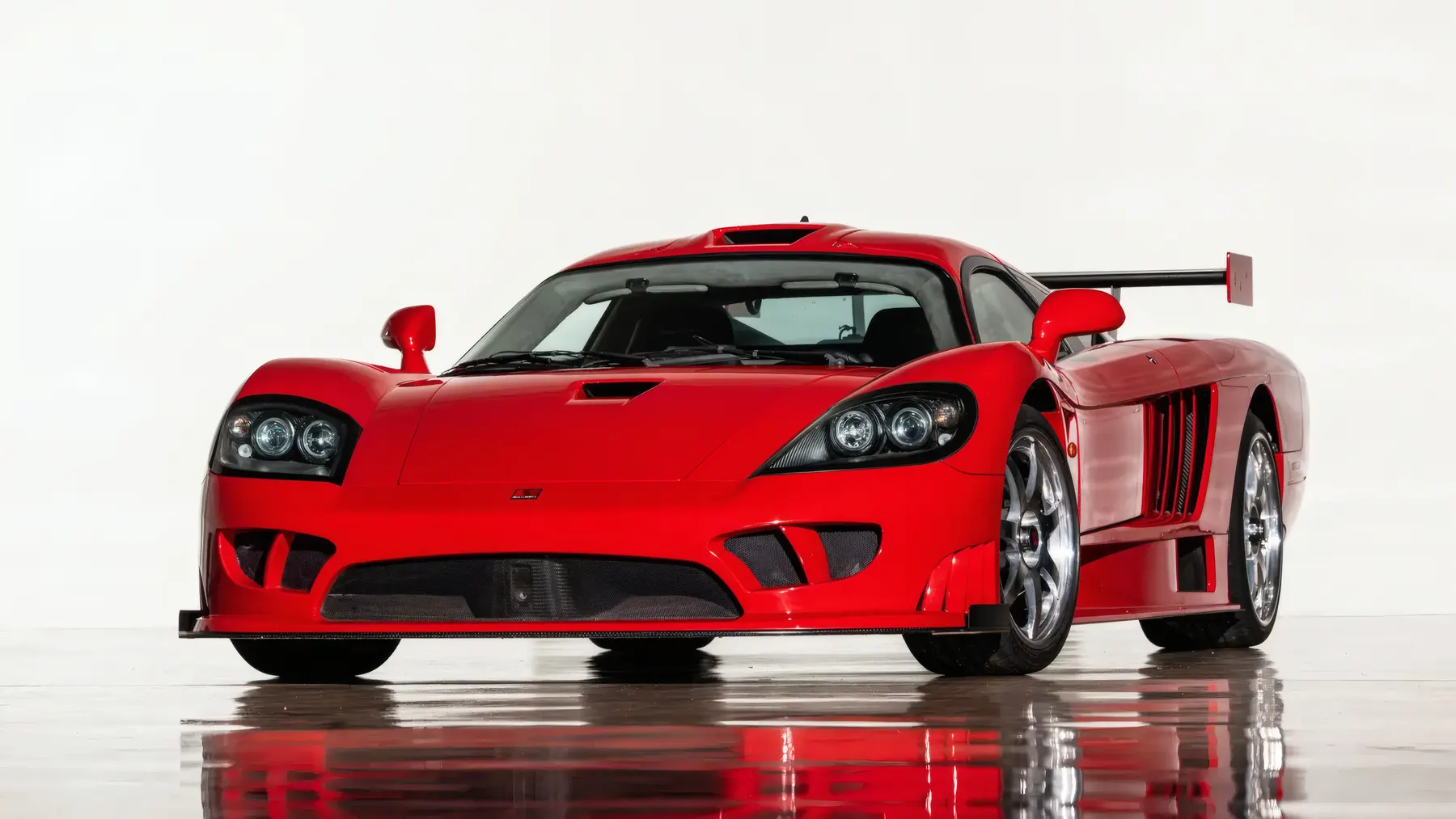
Most supercar options lists sell comfort, colour, or badges nobody strictly needs. Saleen’s order form for the S7 offered something closer to a genuine engineering escalation: a single checkbox that took the company’s already merciless homologation special and made it meaner still. Very few buyers ever ticked it, and the ones who did ended up with a car whose road manners retreated even further behind its racing ambitions - more power, more downforce, less compromise. That option, badged simply the Competition Package, actually existed in two quite different forms across the S7’s short life, born years apart around two different engines, and together they represent the purest, least diluted expression of what Saleen was trying to build in the first place.
Steve Saleen had spent the 1990s modifying Mustangs and running a successful GT racing programme, and by the end of that decade he wanted something entirely his own: a proprietary, mid-engined supercar built to embarrass Ferrari and Lamborghini on their own terms. The S7 debuted at the Monterey Historic Races in August 2000, only the sixth American mid-engine production sports car of any kind, following a short and thin lineage that included the Consulier GTP and the Vector W8 and M12. Saleen has always described the car as his own company’s design, though the fuller record - including reporting by Car and Driver and corroborated by the firm’s own staff - credits England’s Ray Mallock Ltd. (RML), the race-engineering outfit behind Nissan’s and Vauxhall’s touring car programmes, with the tube-frame chassis, suspension, and aerodynamic development, while designer Phil Frank shaped the exterior and interior almost entirely on an early, evaluation copy of 3D CAD software. Whoever deserves the greater credit, the collaboration produced something genuinely unusual: a hand-built 7.0-litre American V8 wrapped in a carbon-fibre body atop a steel-and-aluminium-honeycomb spaceframe, engineered from the outset so it could be homologated for GT racing as the S7-R.
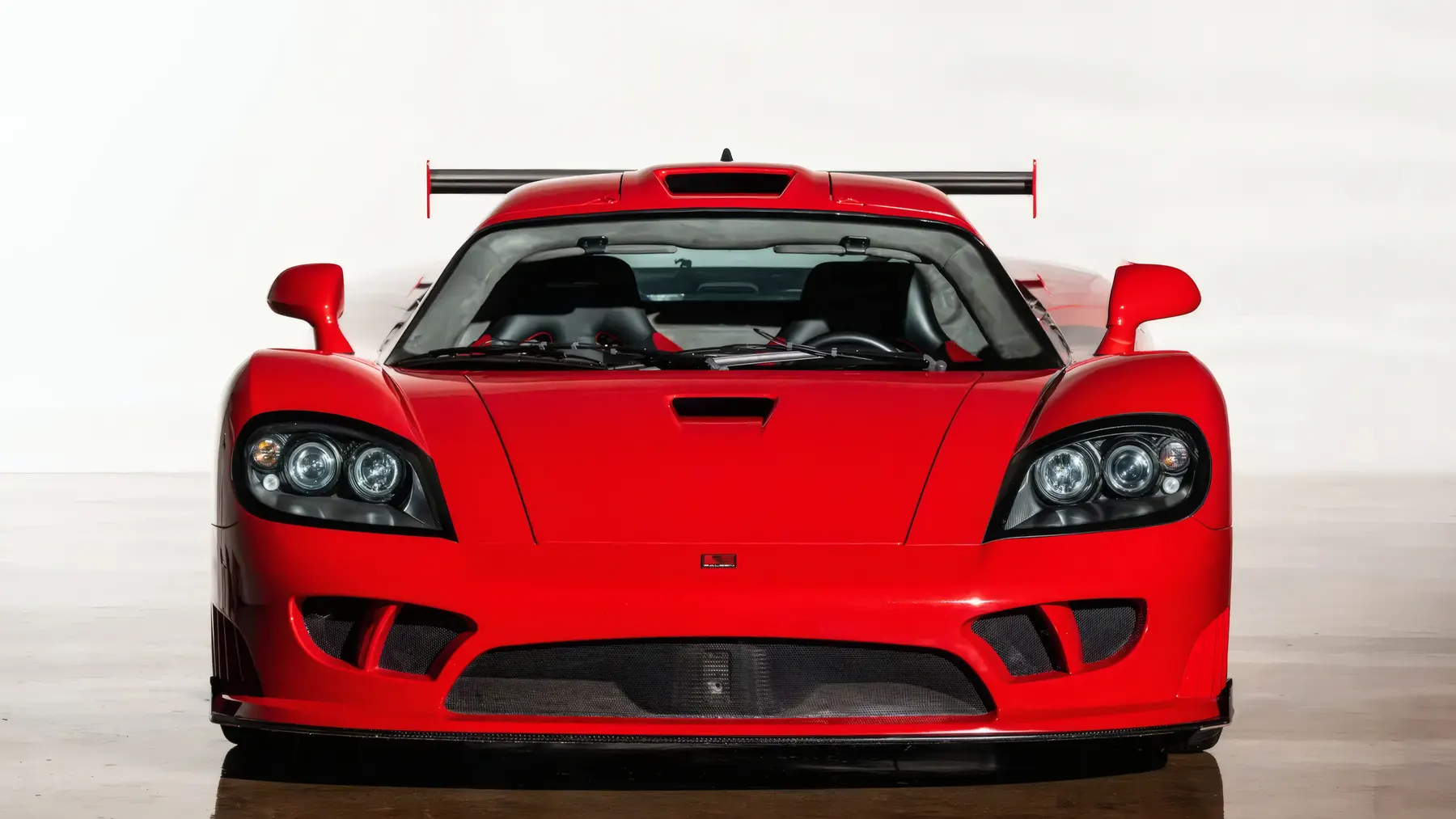
The engine was the one piece Saleen insisted on doing entirely in-house: a bored-and-stroked, all-aluminium derivative of Ford’s small-block Windsor architecture, with reworked, Cleveland-style canted-valve heads, displacing 6,991cc - deliberately not based on Ford’s bulkier FE big-block. Saleen’s own reasoning was that a compact pushrod V8 gave him a packaging and centre-of-gravity advantage that European manufacturers’ complex twin-cam engines could not match, freeing the carbon body to chase aerodynamic efficiency rather than clearance for a tall engine. The chassis followed similarly function-first logic: a tubular 4130 steel spaceframe reinforced with aluminium honeycomb panels, split into bolt-together sub-assemblies for rapid servicing, keeping the naturally aspirated car’s kerb weight to around 1,300kg. Saleen’s claims for the bodywork’s aerodynamics were extraordinary even by supercar standards - downforce said to equal the car’s own weight at 160mph - though, as more than one road tester noted at the time, nobody was ever in a position to verify that on public roads.
In its original naturally aspirated form the S7 made 550bhp at 6,400rpm, enough for an estimated 0–60mph in around 3.3 seconds and a claimed top speed of 220mph that was never independently confirmed. Saleen launched the car at just under $400,000, a startling sum for a manufacturer with no production supercar pedigree whatsoever, pitched squarely against Ferrari’s 360 and Lamborghini’s Murciélago despite coming from a Southern California Mustang tuner with a fraction of their resources.
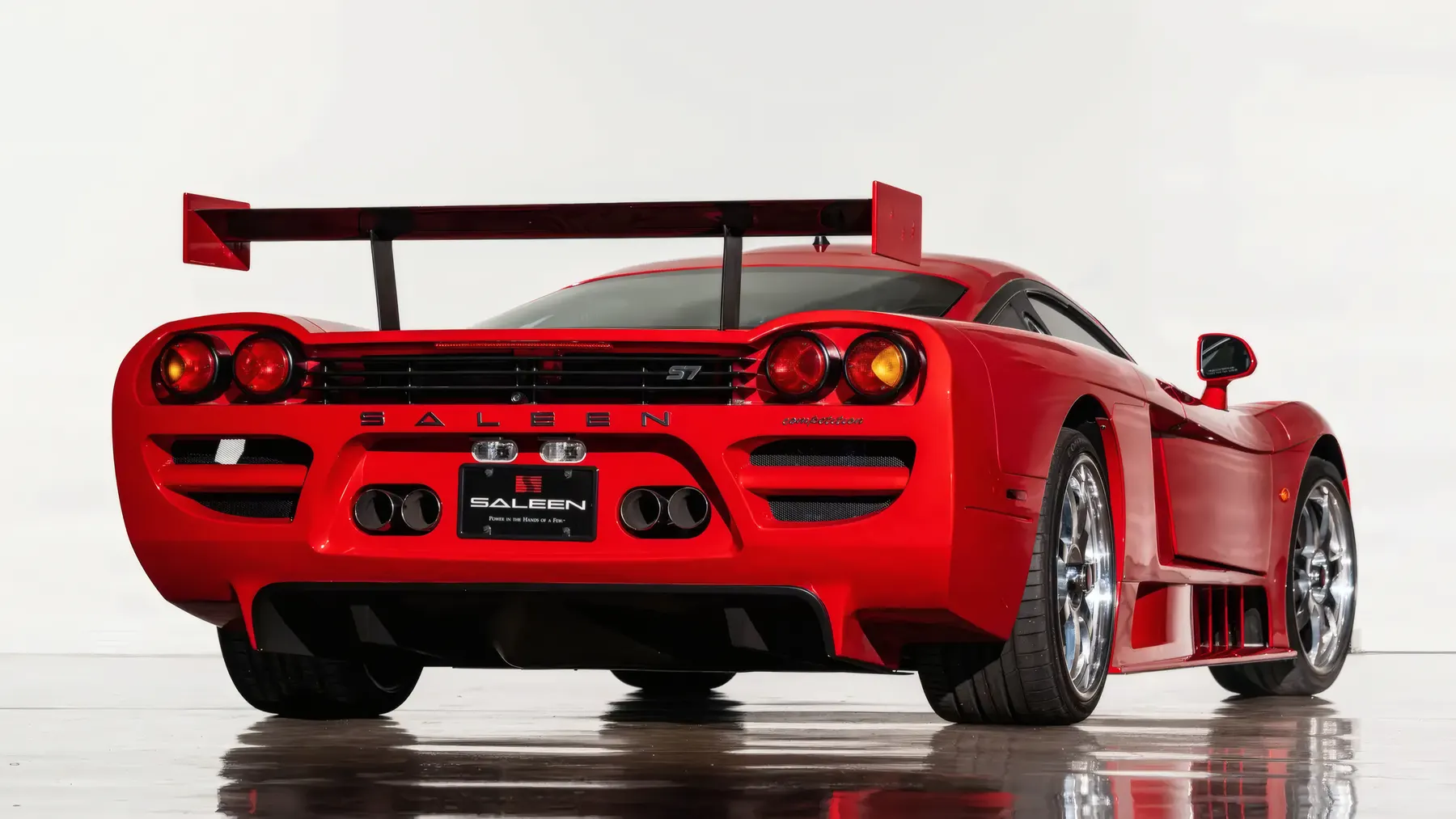
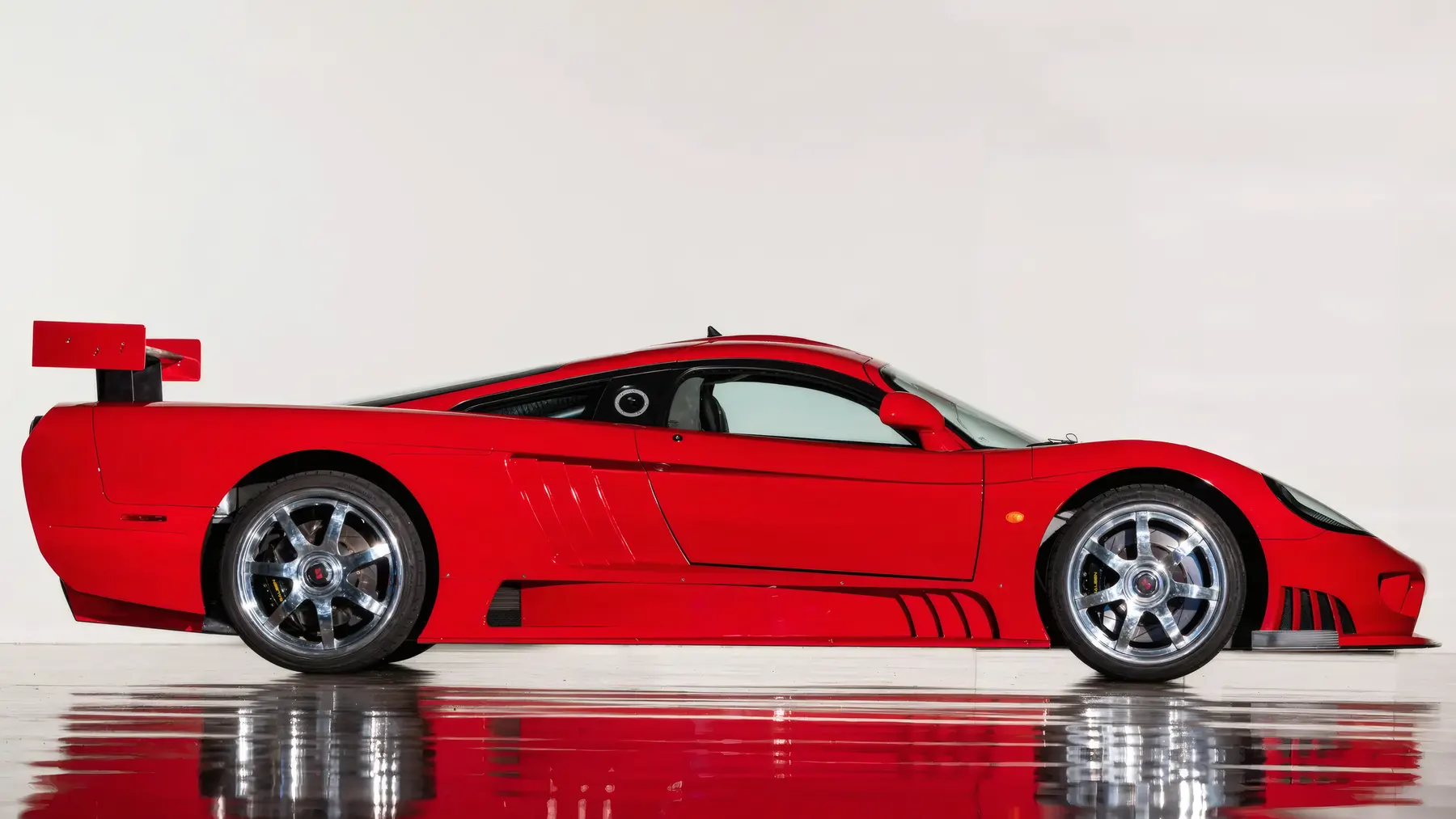
From 2005 Saleen offered a Twin Turbo version, fitted with a pair of Garrett turbochargers running a modest 5.5psi of boost, which lifted output to 750bhp at 6,300rpm and 700lb-ft of torque at 4,800rpm. The front and rear diffusers and rear spoiler were reworked to add a claimed 60 per cent more downforce, and estimated top speed climbed toward 250mph. Pricing rose accordingly, comfortably clearing half a million dollars for a well-specified example.
The first cars badged with a “Competition” designation, however, were naturally aspirated. Saleen catalogued a Performance NA upgrade - a new camshaft, a remapped ECU, and revised intake and exhaust - that raised output to around 625bhp, at an eye-watering additional cost of roughly $75,000 on top of an already six-figure car. Bundled with the mechanical work came an aggressive rear wing, racing-style seats, and extra aerodynamic aids; a handful of these naturally aspirated cars were further fitted with distinctive tri-Y “Triple Y” exhaust headers, though by most accounts no more than four naturally aspirated Competition Package cars were built in total.
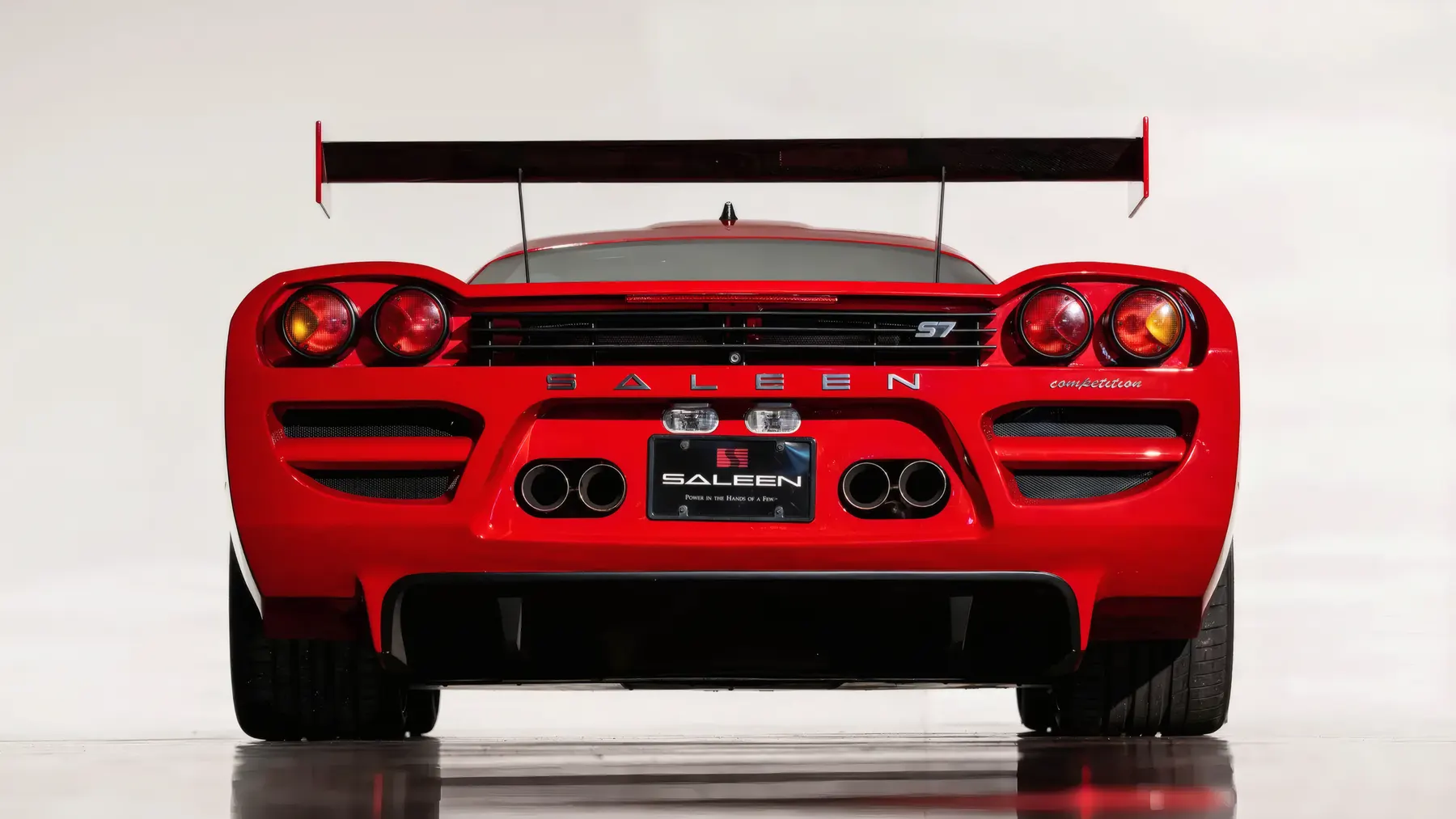
The far more famous Competition Package arrived later and rode on the turbocharged engine. Around 2006, reportedly after a Canadian customer’s Twin Turbo S7 was returned to the factory for engine work, Saleen and the owner agreed to push boost pressure well beyond standard Twin Turbo settings; the resulting car was fitted with an FIA-style rear wing and “Competition” script badging, and the configuration was then formalised as a factory option. Saleen quoted a roughly 33 per cent power increase over the standard Twin Turbo, landing at approximately 1,000bhp, alongside retuned suspension and a further reworked front splitter and rear diffuser. It is a striking number to set alongside the naturally aspirated S7-R race engine that started the whole project: even fully unrestricted for competition, without the intake restrictors GT regulations demanded, that 7.0-litre race unit topped out at around 760bhp - meaning the road-going Twin Turbo Competition Package, built for public roads, was claimed to out-power its own homologation-mandating racer by roughly a third. Only two Twin Turbo Competition Package cars are documented as having left the factory in this specification, making it very possibly the rarest configuration of an already vanishingly rare model.
Saleen’s own Twin Turbo Competition press car was handed to journalists, who reported 0–60mph runs as quick as 2.6 seconds - figures that, if accurate, would have embarrassed almost anything else on sale at the time, turbocharged hypercars included. Saleen’s literature continued to quote a 240mph top speed for the standard Twin Turbo, and although rumours persisted of Competition-spec cars exceeding 260mph in private testing, no independent outlet ever pinned down a verified figure for any version of the S7; more than one road tester has since observed, half in jest, that establishing the car’s true top speed remains unfinished business.
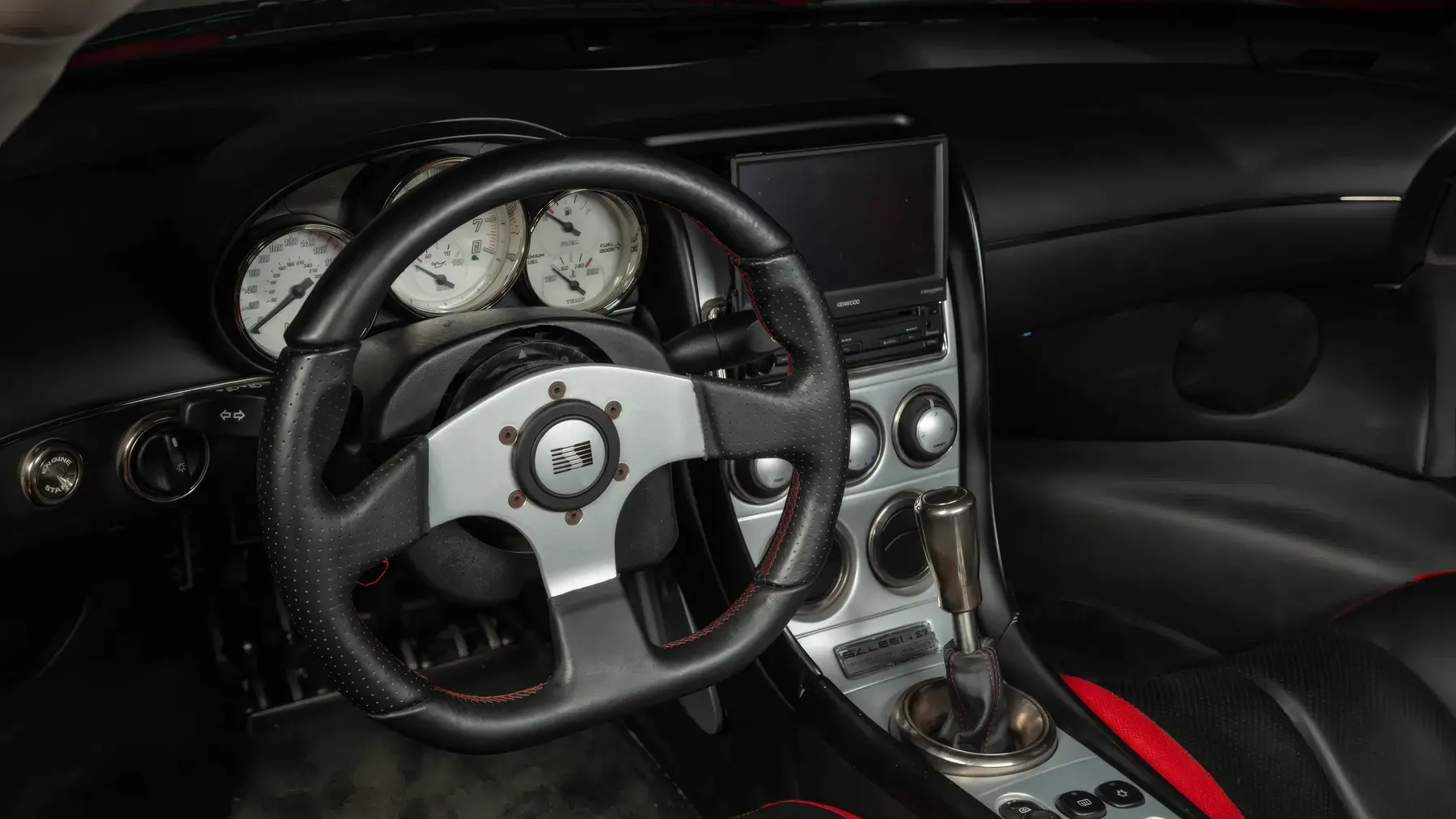
Behind the wheel, the S7 asked a great deal of its driver before it gave much back. The cabin is deliberately asymmetric, the driver’s seat shifted toward the car’s centreline to improve outward visibility and centralise mass, flanked by a Formula 1-style steering wheel and a spare, function-first instrument layout. The six-speed manual transaxle shifts with a heavy, deliberately mechanical action that road testers have generally enjoyed rather than merely tolerated, gear selection precise even if the shift itself feels more industrial than sporting; the clutch is firm but progressive enough to pull away smoothly. Saleen’s own literature listed power-assisted steering among the S7’s standard equipment, though several road testers and the model’s own museum placards describe a car built without the power steering, traction control, or stability control that had become common on rival exotics by the mid-2000s - accounts differ on the specifics, but the overall impression across reviews is consistent: a heavier, more mechanical car to drive than its price and performance figures might suggest, with visibility that, in typical mid-engined fashion, is not brilliant.
That authenticity came at a real cost in everyday usability, and it is worth naming the specific ways the S7 fell short rather than waving them off as charm. The footwells are notoriously narrow and offset, a consequence of packaging the pedals around the centrally mounted driver’s seat, and more than one owner and reviewer has found the pedal box genuinely difficult to operate in anything but slim-soled driving shoes. The fixed racing seats offer no adjustment for reach or recline, which has left some taller or larger drivers unable to find a workable position at all - a real problem in a car costing several times the price of its European rivals. Ground clearance is low enough that scraping over ordinary driveway transitions and speed humps was a routine irritation rather than an occasional one. At least one widely reported account of an S7 pressed into promotional rental-fleet duty described a genuinely difficult-to-modulate clutch and transmission pairing, and brakes that disappointed testers more accustomed to the resolved, everyday usability of contemporary Ferraris and Lamborghinis - a reminder that Saleen’s small engineering team, brilliant as its ambitions were, never had the development resources of the manufacturers it was chasing. Saleen’s own chronic financial instability through the 2000s, well documented in the trade press and in a string of lawsuits, also left owners without the dealer network, parts security, or long-term reassurance that buyers of similarly priced European exotics could take for granted.
None of this undermined the S7’s competition credentials, which were real rather than decorative. The racing S7-R, built alongside the road car and initially assembled by RML before Saleen and the French Oreca squad took over production, competed from 2000 to 2007 in the American Le Mans Series, the FIA GT Championship, and at Le Mans itself. Fordahl Motorsports and, later, Park Place Racing campaigned the car in Grand-Am competition in North America, while Graham Nash Motorsport won both the British GT and Spanish GT championships outright with it in 2002, and Konrad Motorsport’s Europe-based effort took the S7-R to a sixth-place finish in the FIA GT Championship in 2003. Class wins followed at both the 12 Hours of Sebring and the 24 Hours of Le Mans across the car’s career, with a Larbre Compétition-run example taking the model’s only outright LMGT1 class victory at Le Mans in 2010, some years after Saleen’s own factory involvement had wound down. The S7-R’s most celebrated result, though, came in 2004, when Vitaphone Racing’s example beat a grid of factory Ferraris and Maserati MC12s at Ferrari’s own Imola test track in front of assembled press and VIPs, prompting Ferrari’s then-CEO Luca di Montezemolo to admit, “We were no match for the Saleens today.” It remains one of the more improbable upsets in modern sports-car racing, and it is the reason the road-going Competition Package never felt like empty marketing: the car it was built to resemble had already proven itself against the best of Maranello and Sant’Agata.
Reception among the specialist motoring press mixed genuine admiration with a candid acknowledgement of the gulf in resources between Saleen and the manufacturers it was targeting. Testers were consistently struck by the sheer drama of the performance and the novelty of a credible American rival to Ferrari and Lamborghini, while just as consistently noting a cabin and control weights that felt closer to a race car with number plates than a finished luxury product - precisely the trade-off Saleen had chosen to make, and one that the Competition Package pushed further still rather than softened.
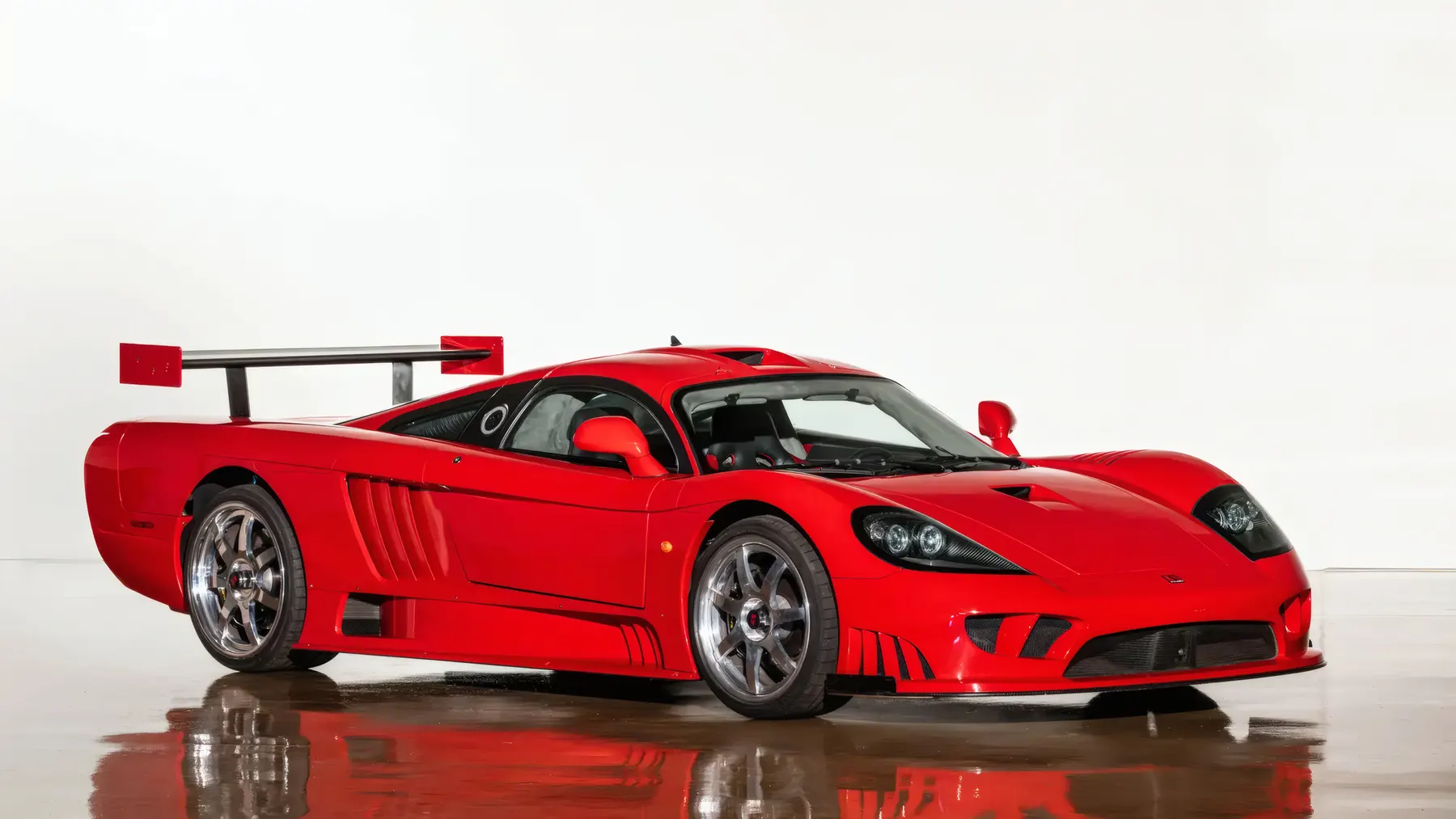
Saleen never published official production figures, and independent research generally places total S7 output - road and racing chassis combined, naturally aspirated and Twin Turbo together - somewhere in the mid-to-high seventies, making it one of the rarest series-production supercars any American manufacturer has built. Within that already tiny number, Competition Package cars amount to a literal handful: around four naturally aspirated examples and perhaps two Twin Turbo cars built to the full 1,000bhp specification. Its legacy was never really about volume. It was about proving that a small Californian Mustang-tuning outfit could design, engineer, and race a car capable of beating Ferrari at Ferrari’s own test track, and that when the company had the chance to make its flagship more comfortable, more usable, or more forgiving, it chose instead to make it faster and more extreme. The Competition Package is what that decision looked like once Saleen stripped away the last of the compromises.
Technical data
Specifications
| S7 (naturally aspirated) | S7 Competition Package (NA) | S7 Twin Turbo | S7 Twin Turbo Competition Package | |
|---|---|---|---|---|
| Engine | 7.0L (6,991cc) NA V8, Ford Windsor-derived | Same block; revised cam, ECU, intake, exhaust | 7.0L (6,991cc) twin-turbo V8 (Garrett turbochargers, 5.5psi) | Same twin-turbo V8, elevated boost pressure |
| Power | 550bhp @ 6,400rpm | approx. 625bhp* | 750bhp @ 6,300rpm | approx. 1,000bhp* (approx. 33% over standard TT) |
| Torque | not officially published | not officially published | 700 lb-ft @ 4,800rpm | not officially published (higher than standard TT) |
| 0–60mph | approx. 3.3 sec (est.)* | approx. 3.3 sec (est.)* | not independently confirmed | as low as 2.6 sec, per journalists driving the factory press car* |
| Top speed | 220mph claimed, unconfirmed* | 220mph+ claimed, unconfirmed* | approx. 240–250mph claimed, unconfirmed* | rumoured 260mph+, never independently verified* |
| Kerb weight | approx. 1,300kg | approx. 1,300kg (not separately published) | approx. 1,300kg (not separately published) | approx. 1,338kg (specific Competition-spec figure) |
| Transmission | 6-speed manual transaxle | 6-speed manual transaxle | 6-speed manual transaxle | 6-speed manual transaxle |
| Wheelbase / length / width / height | 2,700mm / approx. 4,775mm / approx. 1,985mm / 1,041mm (shared across variants) | |||
| Approx. price when new | just under $400,000 (2000 launch) | base price plus approx. $75,000 upgrade | from approx. $550,000+ | approx. $555,000 (documented for one Competition-spec example) |
Sources
- RM Sotheby’s: 2003 Saleen S7 ‘Competition Package’
- Barrett-Jackson: 2003 Saleen S7 Competition Package
- Carscoops: World’s Only Saleen S7 Twin Turbo With Competition Package
- Robb Report: A 1-of-2 Saleen S7 Competition Package Is Currently Up for Grabs
- Audrain Automobile Museum: 2005 Saleen S7 “Twin Turbo Competition Package”
- FastestLaps: Saleen S7 Competition specs and performance data
- Supercars.net: 2006 Saleen S7 Twin Turbo Competition
- Wikipedia: Saleen S7
- Wikipedia: Saleen S5S Raptor
- Wikipedia: Saleen (company)
- Jalopnik: The Mysterious, Disputed Birth Of America’s Greatest Supercar
- Yahoo Autos: Looks Can Be Deceiving With The Saleen S7
- GT Spirit: Road Test - Saleen S7
Join the discussion
Comments
Loading comments…
Leave a comment
Share a detail, memory, or perspective. Every comment is reviewed before publication.